
NLR Battery Innovation Awarded NASA’s Invention of the Year
To Shoot for the Moon, Lab Researchers Must First Learn How To Fail on Earth

Weeks ago, four NASA astronauts completed a pioneering journey around the moon. For 10 days, lithium-ion batteries on Artemis II played an important role in powering various communications, navigation, propulsion, and thermal systems.
Making sure these batteries were up for the mission is a challenge the U.S. Department of Energy’s National Laboratory of the Rockies (NLR) has spent more than a decade collaborating with NASA to address.
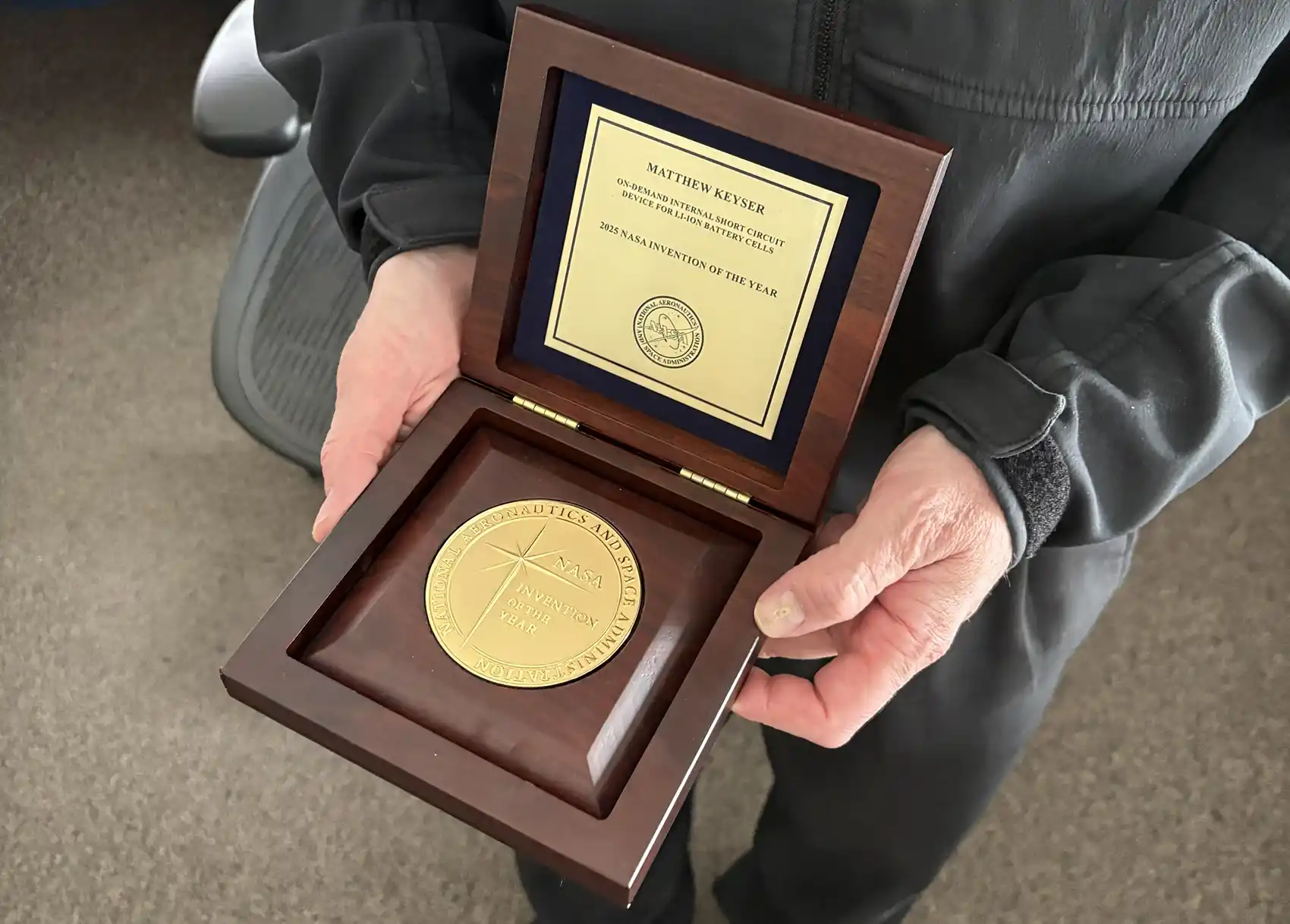
As it turns out, part of the solution for safer batteries was learning how to make them fail … on purpose. NASA recently awarded NLR researchers and industry partner KULR Technology Group the 2025 Invention of the Year for an innovation that enables scientists to implant an internal short-circuit device (ISC-D) into lithium-ion cells, triggering battery failure that improves battery testing for space-bound systems.
“The ISC-D trigger cells are our preferred method of conducting our battery test campaigns for all our manned missions,” said Eric Darcy, former battery technical discipline lead at NASA’s Johnson Space Center.
Understanding Failure To Design Safer Batteries
The key to building safer batteries—for space or otherwise—lies in understanding how they fail. Researchers have several methods to analyze battery failure, such as using abuse tests to measure thermal output caused by chemical reactions or examining the composition of battery materials with high-speed X-ray diagnostics. Historically, these abuse tests were limited to external triggers, including nail penetration, overheating, and crushing.
While evaluating how external abuse leads to cell breakdown is an important part of battery safety research, these approaches are unable to replicate the unique reactions that occur when microscopic manufacturing defects cause an internal short circuit. The heat generated within a single cell can spread quickly to neighboring cells and the larger battery pack through a chain reaction of venting gas and extreme heat called thermal runaway. This system-wide failure can have disastrous results, particularly in the harsh and isolated conditions of outer space.
In the worst-case scenario, a flaw introduced by a speck of dust could bring down an entire space capsule and its crew. The ICS-D allows researchers to examine how cells react to internal triggers and design specific thermal management strategies to mitigate battery system failures caused by such defects.
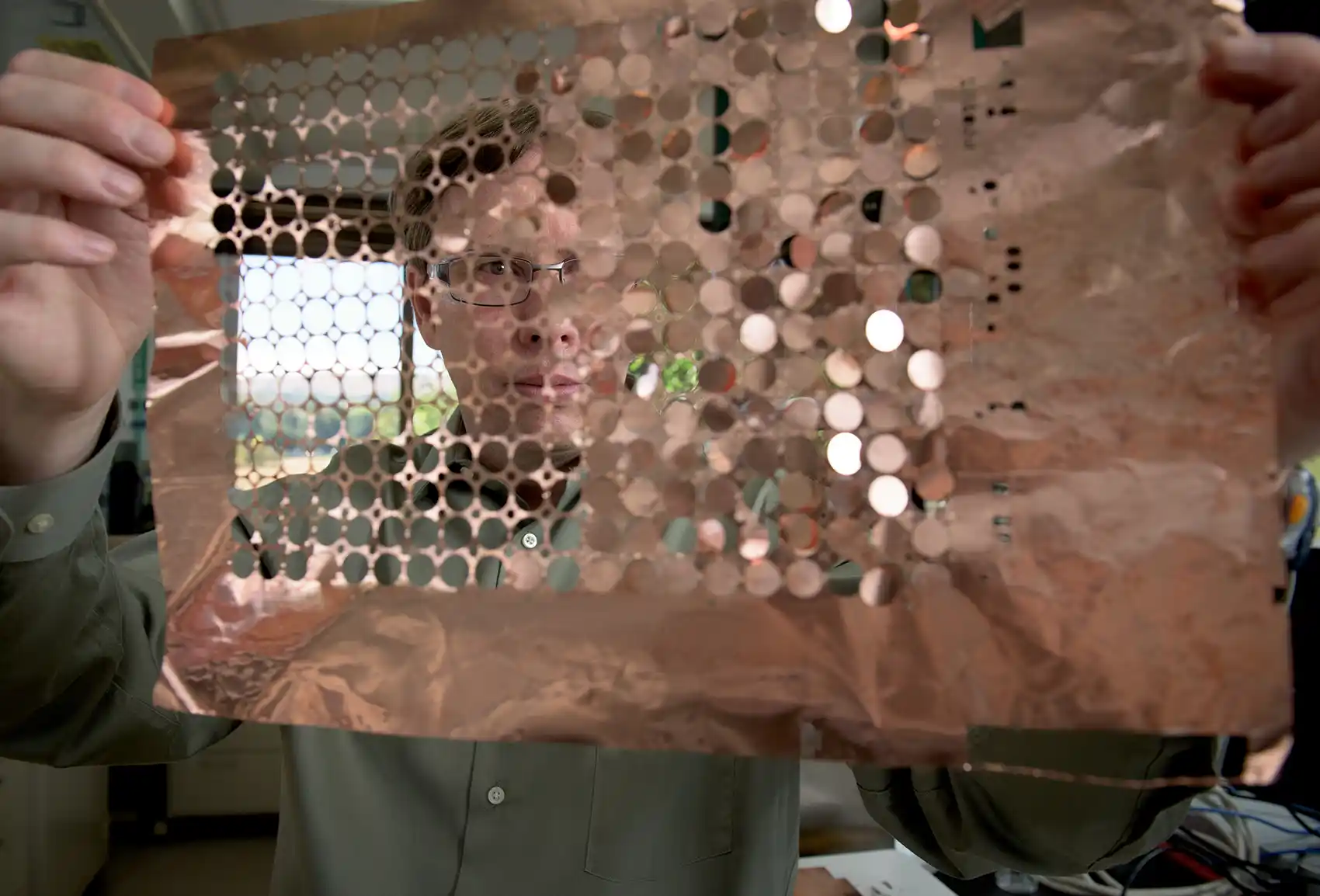
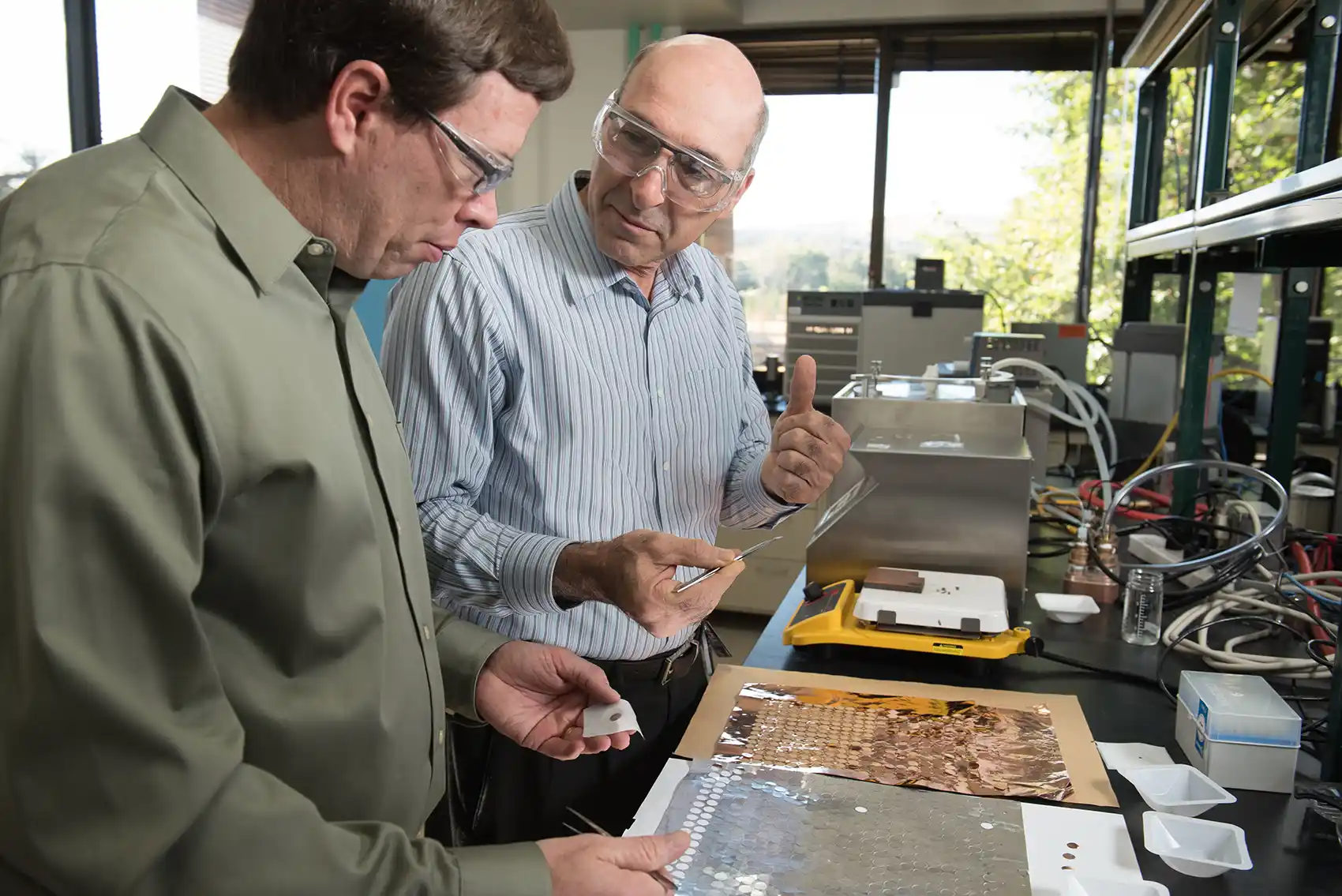
The ISC-D itself consists of three layered metal discs insulated by a thin layer of wax that can be implanted between the anode and cathode of a cell. When researchers are ready to trigger a failure, they increase the cell’s temperature to 57˚C—slightly cooler than a fresh cup of coffee—melting the wax and allowing the metal components to touch, triggering a short circuit in a controlled environment.
“The ISC-D is similar to placing a wrench between the layers of a cell in a precise, repeatable, and controlled environment,” said Matthew Keyser, NLR senior energy storage engineer. “The triggered ISC-D acts as a conductor between the anode and cathode, quickly discharging all the energy within the battery as intense, concentrated heat. The energy release typically exits the cell through a vent that can become a blow torch to adjacent cells.”
Due to disastrous repercussions of battery failures in space, NASA has some of the most rigorous battery safety standards in the world. The laboratory’s ISC-D helps ensure battery systems can handle extreme operating environments. Scientists can run ISC-D tests repeatedly until their battery system designs can withstand and defuse isolated incidents caused by unseen manufacturing defects, even in the most demanding applications, such as a round trip to the moon.
“Nearly all battery designs for manned spacecraft applications have been verified to resist propagation of thermal runaway from cell to cell thanks to test campaigns using trigger cells with the ISC-D,” Darcy said. “Properly designed batteries can tolerate a single-cell thermal runaway event in any location without propagation, which only degrades performance. In contrast, if thermal runaway propagates from cell to cell, it can lead to catastrophic failure.”
The ISC-D Origin Story
This collaboration between NASA and NLR dates back to 2010, when Darcy took a one-year sabbatical to work on NLR’s electrochemical energy storage team alongside engineers Keyser, Dirk Long, and Ahmad Pesaran.
The team used NLR’s existing ISC-D designs to solve a problem that long frustrated the battery industry: creating a reliable way to replicate an internal short circuit in the lab. By the end of the year, the team had created an ISC-D proof of concept worth pursuing.
The success of the ISC-D hinged on the wax insulation. Darcy suggested paraffin wax, but it turned out to be too brittle, flaking apart when the device was rolled into a battery cell. Next, Keyser suggested microcrystalline wax, which was too soft. The ISC-D needed the best of both worlds: flexible enough to bend but rigid enough not to accidentally trigger.
After countless tests—including extensive characterization, differential scanning, and calorimetry—the research team landed on the right paraffin-microcrystalline blend to prompt a controlled failure without damaging the cell beforehand.
“It sounds straightforward, but it took us years to produce a consistent short circuit, even with the specialized equipment and infrastructure available at NLR,” Keyser said. “We are grateful for the support from NASA and the U.S. Department of Energy that helped make this happen.”
The resulting invention went on to earn a prestigious R&D 100 Award, and NLR exclusively licensed the technology to KULR Technology Group, a battery safety and thermal management company.
“It is a very elegant solution,” KULR Chief Technology Officer and past NASA battery engineer Will Walker said. “For KULR, we want to be at the forefront of cutting-edge technology as it pertains to safety, and this is the only true noninvasive triggering method available.”
From NLR to the Moon
Today, KULR has taken the technology a step further: Rather than offering the ISC-D as a standalone product, KULR is now delivering battery cells with the ISC-D already implanted inside. This approach enables safety testing at the product level as preassembled battery systems, not just the single cell.
However, these preloaded ISC-D batteries introduced new safety challenges. KULR consulted directly with the ISC-D inventors at NLR to ensure the batteries could be transported and stored without incident.
“It’s important to be very rigid about safety and quality control,” Keyser said. “We developed strict protocols to discharge cells down to zero percent before shipping, no exceptions, to eliminate the chance of thermal runaway.”
When NASA named the ISC-D its 2025 Invention of the Year, it was the combination of NLR’s foundational research and KULR’s innovative application that earned the recognition. While the original invention gave scientists a new way to understand battery failure, KULR’s embedded-cell approach streamlines testing processes for industry.
As batteries grow more powerful and more ubiquitous—in the cars we drive, the planes we board, the phones in our pockets, and the spacecraft circling the moon—the ability to understand exactly how they fail has never been more critical to ensure safety. According to KULR and NASA, the ISC-D is now used by more than 80 companies, including SpaceX, Tesla, Toyota, and Volkswagen, to test the batteries powering commercial aircraft, satellites, and vehicles.
“Winning this award is a significant accomplishment,” Keyser said. “This project highlights the impact of cross-industry partnerships that change the way we evaluate thermal management systems for batteries.”
Learn more about NLR's energy storage research.
Last Updated April 28, 2026