
Powering the Future: Trevor Martin’s Journey Through Battery Innovation

The border of northern New Mexico and southern Colorado sits on the 37th parallel, a significant circle of latitude north of the Earth’s equatorial plane.
For National Laboratory of the Rockies (NLR) battery materials researcher Trevor Martin, who grew up on the more rural New Mexico side of the parallel, the meeting of these two states was significant for another reason.
“I always dreamed of working as a scientist in the Colorado-area, so I’m glad that my circuitous career path has led me to NLR,” Martin said.
Martin began his scientific pursuit at the University of Chicago, where he studied physics as an undergraduate to become a particle physicist.
“Surprisingly, at the time, I was less interested in chemistry and materials science, but I realized I was even less passionate about the deep math and theory in physics,” Martin said. “I wanted to do something more applied with tangible, real-world impact.”
Finding Tangible, Real-World Impact
Upon completing his bachelor’s degree, Martin’s calling to change the world led him to Argonne National Laboratory to focus on atomic layer deposition for dye-sensitized solar cells.
“This was a key experience that got me excited about the national labs and photovoltaics research,” Martin said.
It also inspired him to pursue a doctoral degree at the University of Washington to explore a budding interest in materials science and chemistry. While there, he worked closely with professors Christine Luscombe and Hugh Hillhouse on polymer chemistry and thin-film chalcogenide photovoltaics.
“It was an amazing opportunity to work in an interdisciplinary area with great colleagues,” Martin said of the experience.
Near the end of his degree program, Martin became interested in electrochemistry and turned his postgraduate sights on studying an essential part of modern life: batteries. That led to him landing a role as the chief scientific officer of a startup focused on lithium-ion battery diagnostics. This experience inspired him to engage more seriously with data science, programming, and algorithm development, and it taught him how to translate fundamental innovation into a business plan.
However, Martin’s dream of being a research scientist persisted.
“During that time, I became very keen to do more on the forefront of battery materials research, so I jumped at the opportunity to work at NLR as a postdoctoral researcher with Nathan Neale,” he said.
The Great Outdoors and Beyond
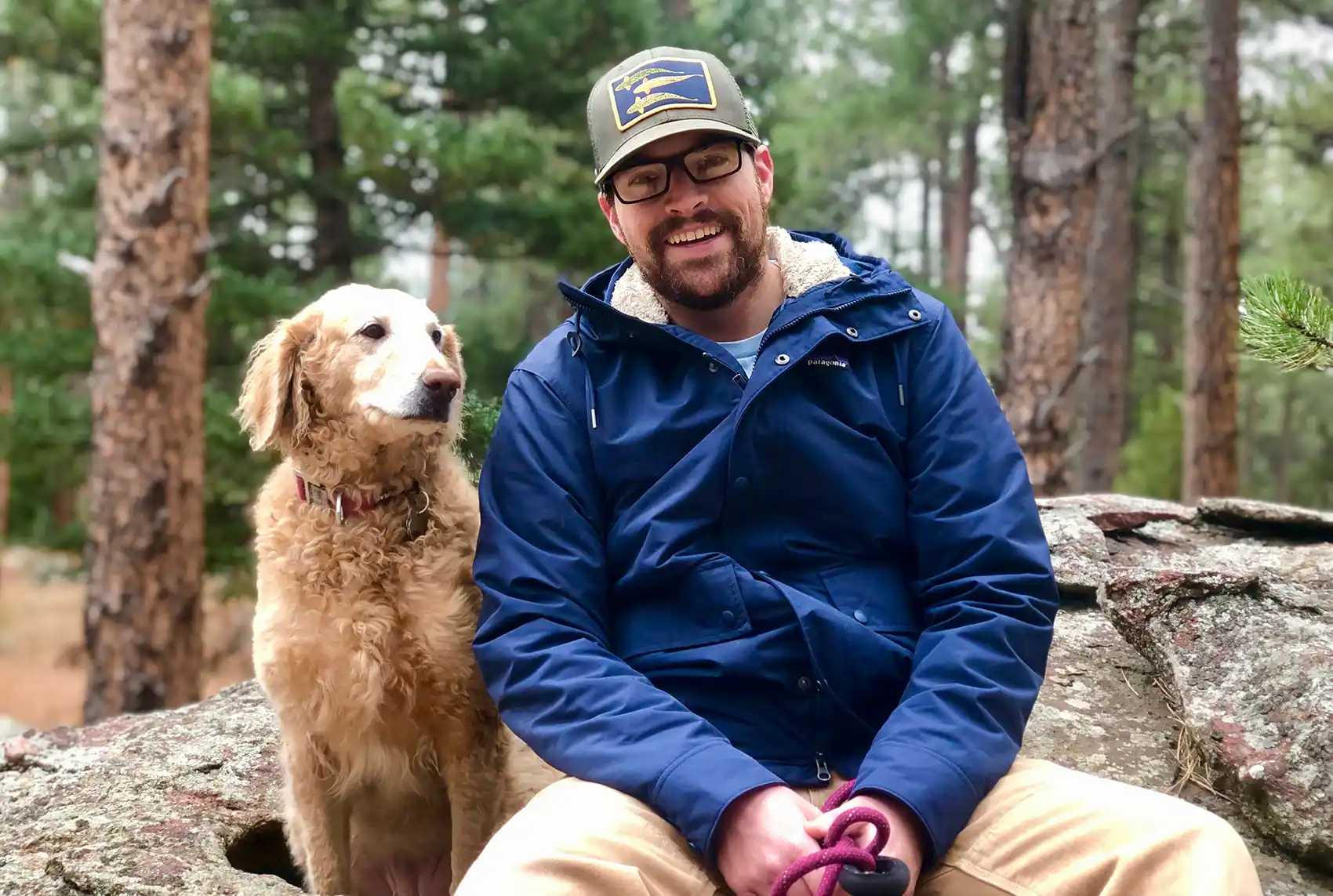
When he is not making breakthroughs in battery research, Martin enjoys “all the stereotypical” Colorado outdoor activities like backpacking, climbing, skiing, and mountain biking. As a new parent, he has enjoyed showing his daughter the natural beauty of the state that he now calls home.
“The scientist in me has been fascinated to see her grow, learn, and become more interested in the natural world,” he said.
Martin also enjoys working with his hands in the form of woodworking and metalworking, and he has even built his own 3D printer.
“I have built some interesting things over the years,” he said, reminiscing on one particularly time-consuming project where he built his own kitchen cabinets. “Still, my favorite is when I rebuilt a classic 1974 Ford Bronco in high school. That project is kind of what started it all.”
Back in the lab, Martin continues to look forward to new possibilities emerging within the lab that could hone his existing skill sets, particularly related to machine learning and big data analysis projects
“I am excited about some of the new initiatives at NLR that are coupling fundamental materials science and chemistry with analyzing large characterization datasets and machine learning tools,” he said. “If we can use these tools to analyze larger parameter spaces more quickly, then we can perhaps come up with even more creative solutions to materials science and chemistry challenges.”
Last Updated April 28, 2026