
Smart Energy Management Research Could Unlock Grid Flexibility and Cost Savings
Partnership With Xcel Energy Reveals Solutions To Meet Needs of and Avoid Unnecessary Expenses for Grid Customers

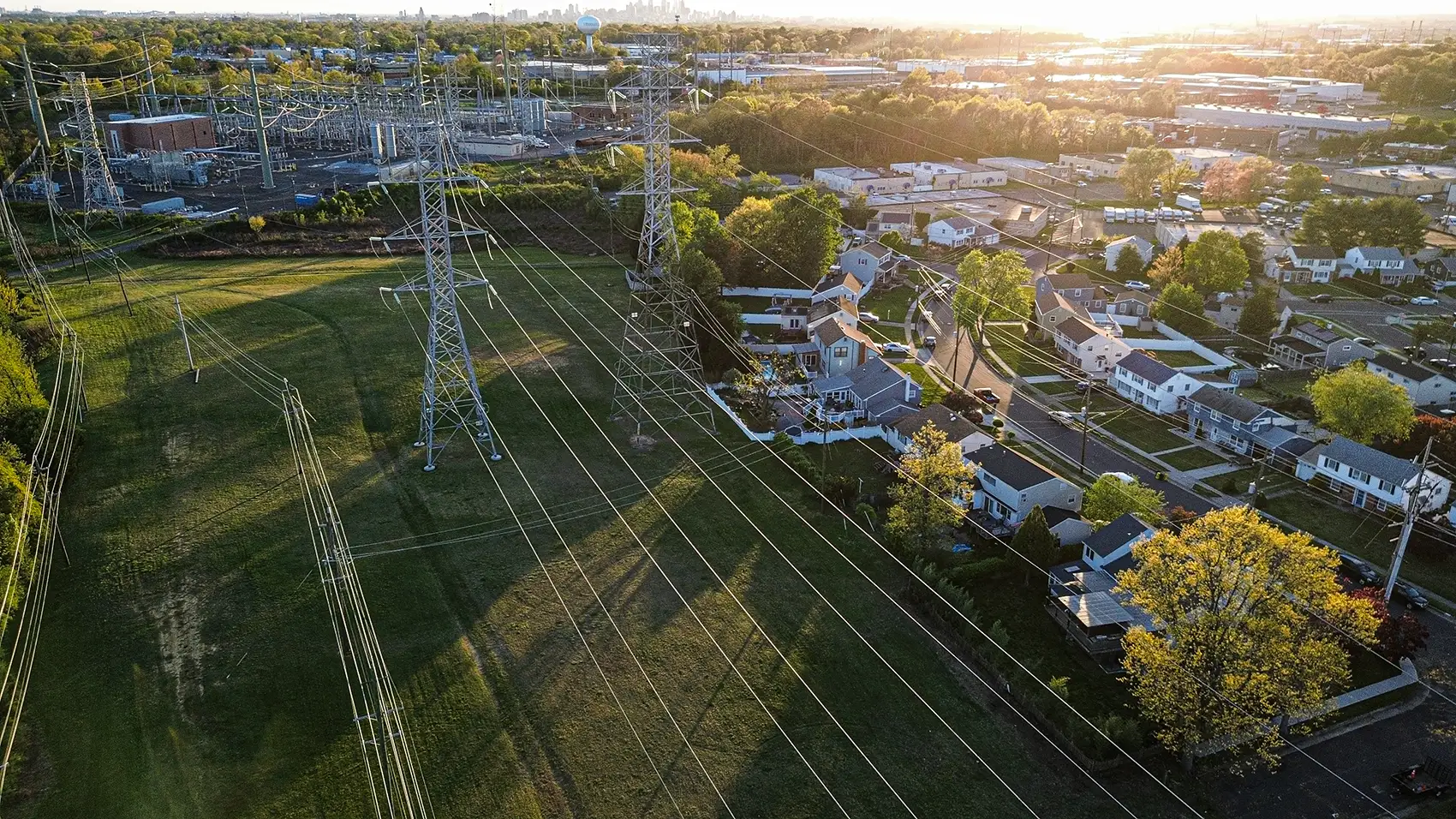
As demand for electricity in the United States grows and evolves, utilities need to continually analyze whether distribution infrastructure is up to the task. Strain on the power grid can risk transformer overloads and power outages and result in higher electricity costs if growing demand is not addressed—requiring utilities to make decisions balancing reliability, safety, and cost considerations.
Research conducted by the National Laboratory of the Rockies (NLR) for large public-utility company Xcel Energy sought to identify solutions to mitigate costly grid upgrades by applying algorithms to balance electric loads in a way that preserves the same level of service and manages costs. While there are numerous drivers of electric load growth including data centers and artificial intelligence (AI), Xcel Energy noticed an increasing number of their customers were purchasing electric vehicles, triggering their need to plan for solutions that minimize and potentially even reverse adverse impacts of increased power demand by leveraging load flexibility.
Xcel Energy serves more than 3.7 million electric customers across parts of eight states—Colorado, Minnesota, Wisconsin, Michigan, North Dakota, South Dakota, Texas, and New Mexico. Through a partnership with Xcel Energy, NLR developed scenarios to analyze selected areas within the utility’s electric distribution network and provided high-resolution information on how it may be affected by different scenarios of electric demand in both quantity and time of day.
These scenarios led to the development of a new open-source tool, the Electric Vehicle Infrastructure – Distribution System Integration Tool (EVI-DiST). EVI-DiST enables any utility to analyze their distribution networks and assess the effectiveness of energy management strategies that mitigate ratepayer impacts. While the model was developed for vehicle charging, it is broadly applicable to distributed energy resources that may be installed by home or property owners.
“Working with Xcel Energy provided us the opportunity to identify and understand the critical power demand challenges from the utility perspective, ensuring our solutions accounted for their individual, complex energy needs,” said NLR’s John Kisacikoglu, a senior researcher and the project lead. “We worked to understand how utilities can most cost-effectively navigate the distributed, mobile, and flexible nature of charging vehicles.”
Smart Energy Management Can Optimize Grid Performance, Minimize Cost
Traditionally, utilities upgrade, supplement, or even replace electrical distribution infrastructure to address increasing loads and preserve reliable and safe operations. These upgrades can be time consuming and expensive, which can affect both the quality of service and cost to ratepayers. Utilities have long pursued alternatives to infrastructure upgrades. Now, both growth of new sources of energy demand coupled with sophisticated processing and communication capabilities enables a new set of options that are less time intensive and more affordable. These solutions are “smart” in more than one sense of the word.
Smart energy management (SEM) has the potential to help utilities meet the energy needs of large loads—like data centers and vehicle charging—with fewer distribution system upgrades by moving peak energy demand to occur during the time of day when there is less overall grid demand.
Similar to roads and highways that have periods of increased traffic and congestion, the electric grid has patterns of use that vary significantly over the course of the day and seasonally. In the analysis for Xcel Energy, NLR found that for one of the feeders (part of grid distribution infrastructure) they studied, grid-aware active SEM combined with the long periods of time residential vehicles are usually available to charge (like overnight), enabled more than 94% of charging sessions to be fully satisfied without increasing the number of transformer overloads, compared to a condition without SEM.
SEM options range from time-of-use charges that reduce peak load by providing options for consumers to save money by using electricity during nonpeak times, to more grid-responsive solutions that modulate power based on real-time signals from the power grid (called “grid-aware”). When these options are executed correctly, a utility can spread the electric load over time so that the demand on the equipment distributing the energy is always at or below safe and reliable levels. SEM can allow utilities to continue to serve customers while reducing the need for electric grid upgrades.
For a utility, deciding what kind of SEM control to implement requires having a high-resolution view of their existing grid system, estimating the current and potential growth of demand, and modeling the impacts of different SEM strategies, all to ensure the decisions they make are future-proof and based in accurate data. If that sounds complicated, that’s because it is.
“If you want to understand electricity demand in a parking lot or warehouse, that system is not as complicated,” Kisacikoglu said. “But modeling electricity demand on various electric feeders that span across miles of cities, going into different residential and commercial regions, is not easy. This is especially true when these sources of demand have the ability to move around.”

Researchers Collaborate To Create Custom Models for Xcel Energy in Colorado
Solving challenges that transcend electricity, building, and transportation sectors requires a certain depth and breadth of knowledge that National Laboratory of the Rockies researchers are especially equipped for, given that the organization specializes in holistic energy systems integration. For this particular project, NLR researchers from across transportation, grid planning, and analysis supported Xcel Energy over the course of two years to conduct the analysis and modeling the utility would need to understand their options.
“It added so much value to connect these already well-developed areas of expertise within NLR to access the level of technical expertise we needed to solve this utility-scale challenge,” Kisacikoglu said.
NLR transportation researchers combined existing data and models to develop vehicle energy demand scenarios in Colorado’s Boulder and Aurora service areas near metro Denver. Meanwhile, the grid planning team used data provided by Xcel Energy on their distribution network infrastructure, like distribution lines, feeders, and transformers, to map Xcel Energy’s grid down to the neighborhood level. The team extrapolated that data to extend their model further to secondary and low-voltage lines that serve customers directly—which is necessary to understand needs and impacts on customers.
“We were able to model how the power flows all the way from substation transformers, through electrical lines, to distribution transformers, and into our houses,” said Shibani Ghosh, an NLR grid planning and analysis researcher who worked on the Xcel Energy project. “That information was crucial for developing the baseline model on which the rest of the analysis was based.”
The researchers then combined the vehicle energy demand scenarios with the detailed property-level grid map to create a synthetic forecast, both now and in future scenarios. With this information, they were ready to jump into detailed analyses of how the local grid network in the two sample service areas would be impacted by different energy demand loads and how different SEM approaches might help mitigate extreme stress to the power grid.
The NLR team applied several different SEM controls to projected loads at both the feeder and transformer levels in the selected service areas. Studying different kinds of SEM revealed what factors could go into a utility’s decision-making. Analyzing impacts at both the upstream and individual transformer levels allowed the research team to gain both broad and deep insights into the choices the utility could make to address demand.
“Feeder-level insights can allow the utility to make sense of how population density and distribution of new sources of electricity demand impact the feeders and distribution lines,” Ghosh said. “But only viewing impacts at that level may wash out some of the smaller-scale effects at the transformer level, for example, of smaller pockets of electricity use that could only be resolved with an infrastructure upgrade. Our higher-granularity analysis is highly valuable to help utilities like Xcel Energy balance infrastructure upgrades with SEM algorithm-based solutions.”
Expanding the Project’s Reach With EVI-DiST
While the NLR team was originally tasked only to conduct the analysis and provide Xcel Energy with insights into different SEM options and their impacts, researchers realized there was more to be done.
“We enhanced their analysis process by combining our transportation and grid modeling capabilities to help Xcel Energy get in front of an issue that they clearly saw coming and wanted to proactively address, but we also wanted to develop a way to capture these processes to address other utilities’ priorities,” Kisacikoglu said. “We decided to take the opportunity to meet that need by developing EVI-DiST, which is a step toward automating and generalizing our capabilities for any utility in the nation to use.”
With around 3,000 utility companies nationwide, that is a tall order. The NLR team needed to make the tool as easy to use as possible.
The way Xcel Energy sorted and named their distribution system data was different from NLR’s approach to labeling modeling data. That meant, in order to accurately model demand on Xcel Energy’s grid, the research team had to meticulously match NLR’s data into Xcel Energy’s labeling system to ensure consistency. Then, to embed this data conversion process into EVI-DiST, they also needed to develop documentation.
“Though the tool was initially tailored to Xcel Energy’s needs, we created clear guidance on how the data should be formatted for future users,” said NLR’s Emin Ucer, a grid integration control and software engineer and lead researcher on the development of EVI-DiST. “We explicitly detailed how anyone can convert their data into the right format to use the tool.”
EVI-DiST also offers two different modes that a utility can use to address their specific concerns and identify in detail where and what solutions may be applicable. The “Lite” mode is quicker to run and allows utilities to gain insight into impacts at the higher feeder level, or transformer level, across the span of one week. This mode does not require any electrical feeder model, so there is no power flow simulation, meaning it has a lower computational load and in return provides a bird’s-eye view of operational impacts of loads and compares SEM options at scale.
“Plus” mode, on the other hand, does run an in-depth power flow simulation and provides detailed data on electric loads and voltages on transformers and secondary distribution lines. This can only provide insights on the time scale of one day and for just one SEM option, but it can help a utility dive deeper into specific parts of their distribution network that may be under higher or lower stress from voltage levels and loading conditions. Using these two modes of EVI-DiST, a utility could, for example, discover both which SEM algorithm might be the best fit for a specific service area as well as where they might need to upgrade some infrastructure to best serve users.
Releasing EVI-DiST in an open-source format puts the tool directly in the hands of its users. Rather than providing access only through a licensing agreement, the NLR team decided to put the code for the tool up on GitHub. They say it will make it easier for users to provide critical feedback that can help improve the tool.
“By making EVI-DiST open-source, we can directly collaborate with utility companies to identify ways to solve the problem and improve the tool’s functionalities, ultimately augmenting the value of our efforts,” Kisacikoglu said. “This option also offers us a meaningful way to deliver NLR’s expertise straight to end users.”
To learn more about NLR's custom analyses using EVI-DiST or to explore related partnership opportunities with NLR, contact EVI-DiST@nlr.gov.
Follow NLR's transportation and mobility research and sign up for NLR's Mobility Matters newsletter to stay current on the latest news. Learn more about NLR’s grid modernization research.
Last Updated April 28, 2026