
The Fast Lane: 3 Ways To Get More Critical Minerals, Now
Companies Need Critical Minerals for Electronics, Medical Equipment, Crops, and More. These 3 Techniques (and Others) Could Make Some Easier To Get.

“The Fast Lane” series zooms in on some of the thousands of technologies born in national laboratories that companies can license today. This iteration focuses on tools and methods that could help U.S. industries acquire more critical minerals.
Electric cables. Cosmetics and fertilizer. Aircraft controls, MRIs, and lasers.
All these products—and thousands more—depend on critical minerals: raw materials like copper, cerium, and potash that the U.S. government considers essential to the economy and national security and whose supply chains can be disrupted by geopolitical tensions, extreme weather, or trade restrictions.
As of 2025, the U.S. critical minerals list includes 60 minerals that companies in defense, agriculture, power, mining, and more need to get their jobs done. But spiking demand, restricted access, and rising prices can make it challenging to get these minerals (and, therefore, get the job done).
That is why experts at the National Laboratory of the Rockies (NLR) are researching other ways to make, mine for, or recycle these minerals. And some of these methods are already available for use today—in fact, companies can peruse thousands of licensable technologies on the Lab Partnering Service website.
If your company finds a new method or device—but would like assistance applying it to your industry—you can also partner with a national laboratory, like NLR, and gain access to our researchers, facilities, and knowledge.
To get started, here are three technologies—that are available for licensing or will soon be ready—that could help companies access rare earth elements, graphite, lithium, and other critical minerals.
#1: How To Mine Metals From Seawater, Industrial Waste, and More
What minerals are involved: Rare earth elements.
Who could benefit: Industries that produce the more than 200 products—including electric motors, medical imaging technologies, oil and gas refining equipment, computer and phone screens, lasers, and radar—that depend on rare earth elements.
What is the goal: To create a domestic supply chain for rare earths.
Why it matters: Rare earth elements are often buried in scattered fragments, which makes extraction a bit like mining one needle each from thousands of haystacks. You are better off buying a box of needles instead.
Or are you? What if your neighbor owns almost all the boxes? As of 2025, China dominates the rare earths market, including 70% of mining and 90% of processing and refining. And that dominance can come with unpredictable prices and risk.
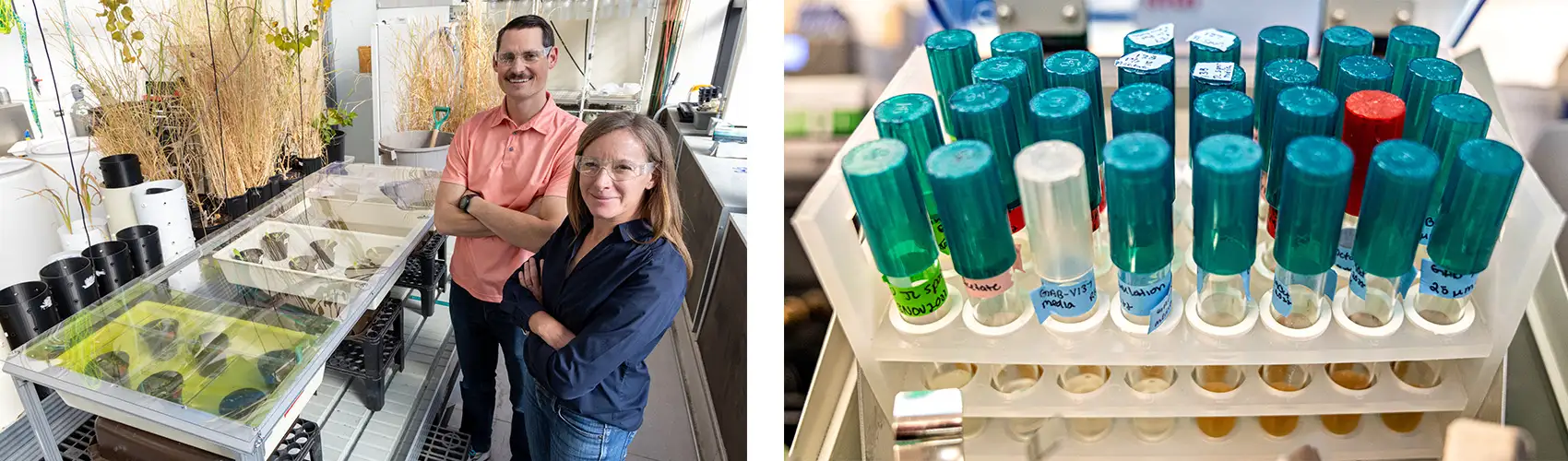
But what if companies could farm rare earths right here in the United States? NLR researchers are studying whether seaweed could supply some critical minerals—like neodymium for lasers, gadolinium for steel, and terbium for fiber-optic cables—with minimal impact to its surrounding environment.
Some plants, like brown seaweed, can soak up metals from surrounding soil and water. If a plant amasses enough of a specific mineral, companies could potentially use it to mine metals from sources that have comparatively low concentrations of rare earths, like seawater. Right now, NLR researchers are exploring which seaweed species absorb which minerals, how they do it, and which are the best miners.
Researchers could also borrow the seaweed’s skill to collect minerals from places where plants might struggle to grow, like mine drainage sites and industrial wastewaters, or even clean up those wastewaters. NLR’s Lieve Laurens has built designer alginate polymers—the components in seaweed that bind to critical minerals and keep them locked inside the plant’s hull. Why buy a box of needles when you can get a polymer to collect them for you?
#2: An Economic Way To Recycle Graphite
What minerals are involved: Graphite.
Who could benefit: Anyone who manufactures or recycles lithium-ion batteries, plus industries that depend on these batteries to power their products.
What is the goal: To reduce the cost and energy intensity of battery manufacturing.
Why it matters: Lithium-ion batteries power smartphones and laptops, underwater defense drones, and industrial robots. And now, these lightweight energy heavyweights are being used as reliable backbones for big power systems, like grids and data centers, to keep them running even when other sources flicker or fail. That means more countries, industries, and people need these batteries. And most must get theirs from just one source: China.
In 2025, China manufactured more than 80% of the world’s lithium-ion batteries. Battery manufacturers based in the United States also heavily depend on imported minerals—also mainly from China.
But what if U.S. manufacturers could create a new supply chain for at least one essential component—graphite—right here at home?
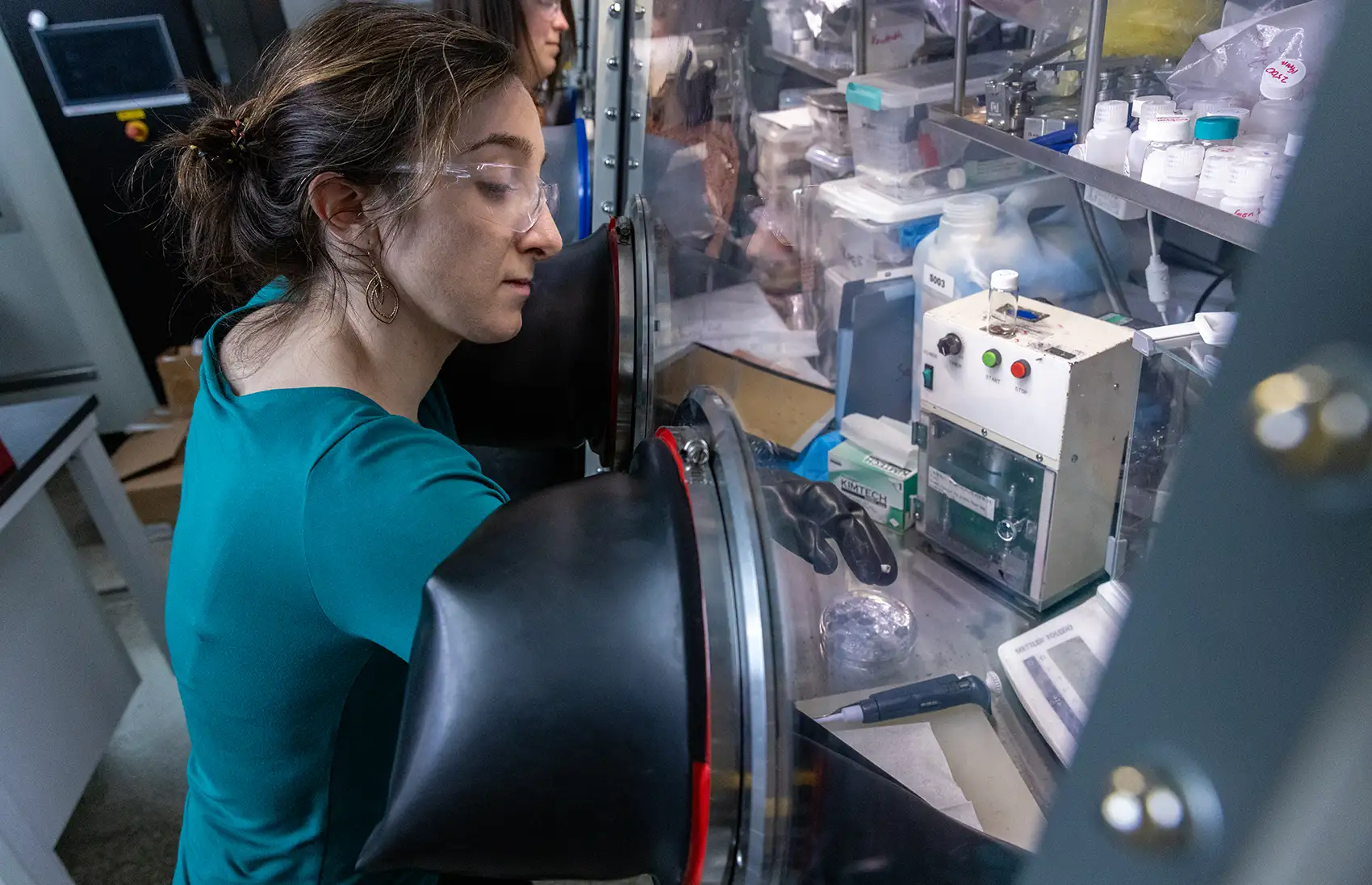
Kae Fink, a research scientist at NLR, specializes in lithium-ion battery recycling. Recently, she designed a new way to recycle graphite. Graphite is a necessary battery component—one recyclers typically toss as waste, because it is often too expensive to recover from spent battery materials.
Fink’s technique could change that. Rather than remaking and breaking in a pristine version of the battery’s graphite anode—which is not just costly but also energy-intensive—battery recyclers could process dead batteries to extract both the graphite and components of an inert layer (called the solid-electrolyte interphase) that batteries need to function properly. The method uses common, inexpensive, nontoxic solvents to remove undesirable materials while retaining those that could improve battery stability, potentially increasing its value.
This new process could enable U.S.-based battery recyclers and manufacturers to upcycle—rather than toss—graphite and reduce the overall cost and energy intensity of making lithium-ion batteries.
#3: Supply Chain Recipes To Cut Costs and Energy
What minerals are involved: Hundreds of potential raw materials, including critical minerals.
Who could benefit: Manufacturers and supply chain researchers.
What is the goal: To clarify complex supply chains and help reduce manufacturing costs and energy demand.
Why it matters: Modern supply chains are complex. A single product can require dozens of raw materials, energy sources, and processing steps—many of which are not obvious from the finished product.
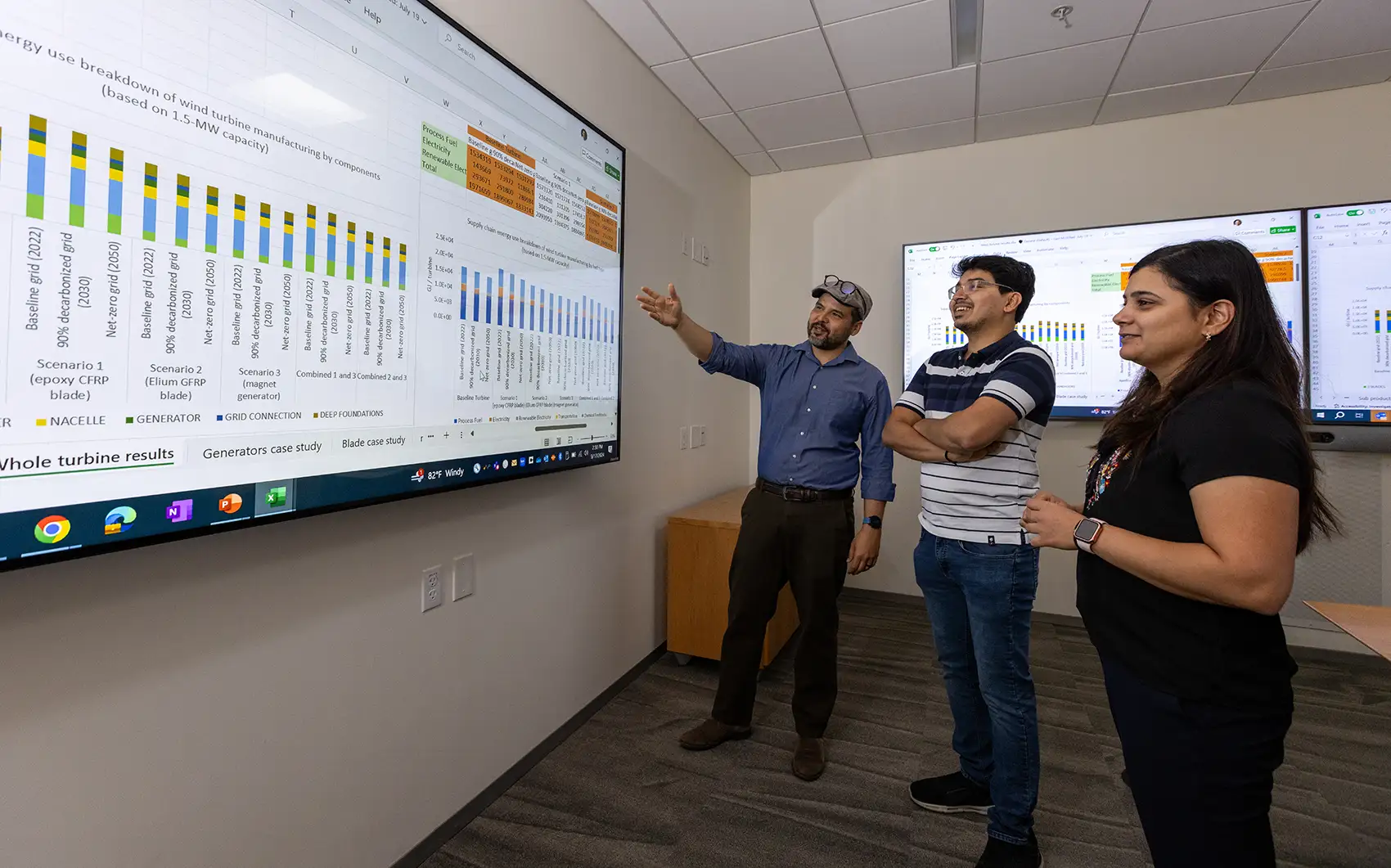
The MFI tool—short for Materials Flows through Industry—helps tally these hidden ingredients.
For example, according to MFI, if you want to make 1 kilogram of copper wire, you will need about 4 kilograms of copper concentrate, 9.6 kilowatt-hours of electricity, 0.8 kilograms of oil and oil resid (the thick residue left behind after oil refining), 0.8 cubic meters of natural gas, and 5 kilograms of water.
Say a manufacturer wants to cut costs. They could consider other recipes for their product that might consume less energy and water (and therefore less money). Or maybe a manufacturer wants to bypass a rare or expensive raw material. They could try out a different recipe, one that adds a dash of an alternative. Researchers can also use the MFI tool to explore which processes—from manufacturing to recycling—might demand more raw materials, water, energy, or money.
And two National Laboratory of the Rockies-based research teams have published papers on their MFI-driven findings. One identified that recycling the tough plastic, poly(ethylene terephthalate) or PET, could be more cost-effective than manufacturing new PET. Another explored whether lightweight cars would demand less energy than heavier alternatives over their lifetimes, from manufacturing through use (spoiler alert: they likely do).
So, if you are wondering what it takes to produce bioinsecticides, potash fertilizer, lithium-ion batteries, or steel, let MFI be your guide. The tool can reveal hidden material and energy inputs to help manufacturers identify both supply chain risks and opportunities.
Explore thousands of licensable technologies, methods, and tools that could help you do what you do best. Learn more about NLR's research on critical minerals. And visit NLR's licensing page to learn more about how to make our technologies work for your business.
Last Updated April 28, 2026