
Lorem ipsum dolor sit amet, consectetur adipisicing elit, sed do eiusmod tempor incididunt ut labore et dolore magna aliqua. Ut enim ad minim veniam, quis nostrud exercitation ullamco laboris nisi ut aliquip ex ea commodo consequat. Duis aute irure dolor in reprehenderit in voluptate velit esse cillum dolore eu fugiat nulla pariatur.
Duis aute irure dolor in reprehenderit in voluptate velit esse cillum dolore eu fugiat nulla pariatur. Excepteur sint occaecat cupidatat non proident, sunt in culpa qui officia deserunt mollit anim id est laborum.

NLR Researcher Gregg Beckham Receives US Department of Energy Ernest Orlando Lawrence Award
Award Recognizes Advances in Biomass Conversion and Plastics Recycling Made Possible Through Extensive Scientific Collaborations

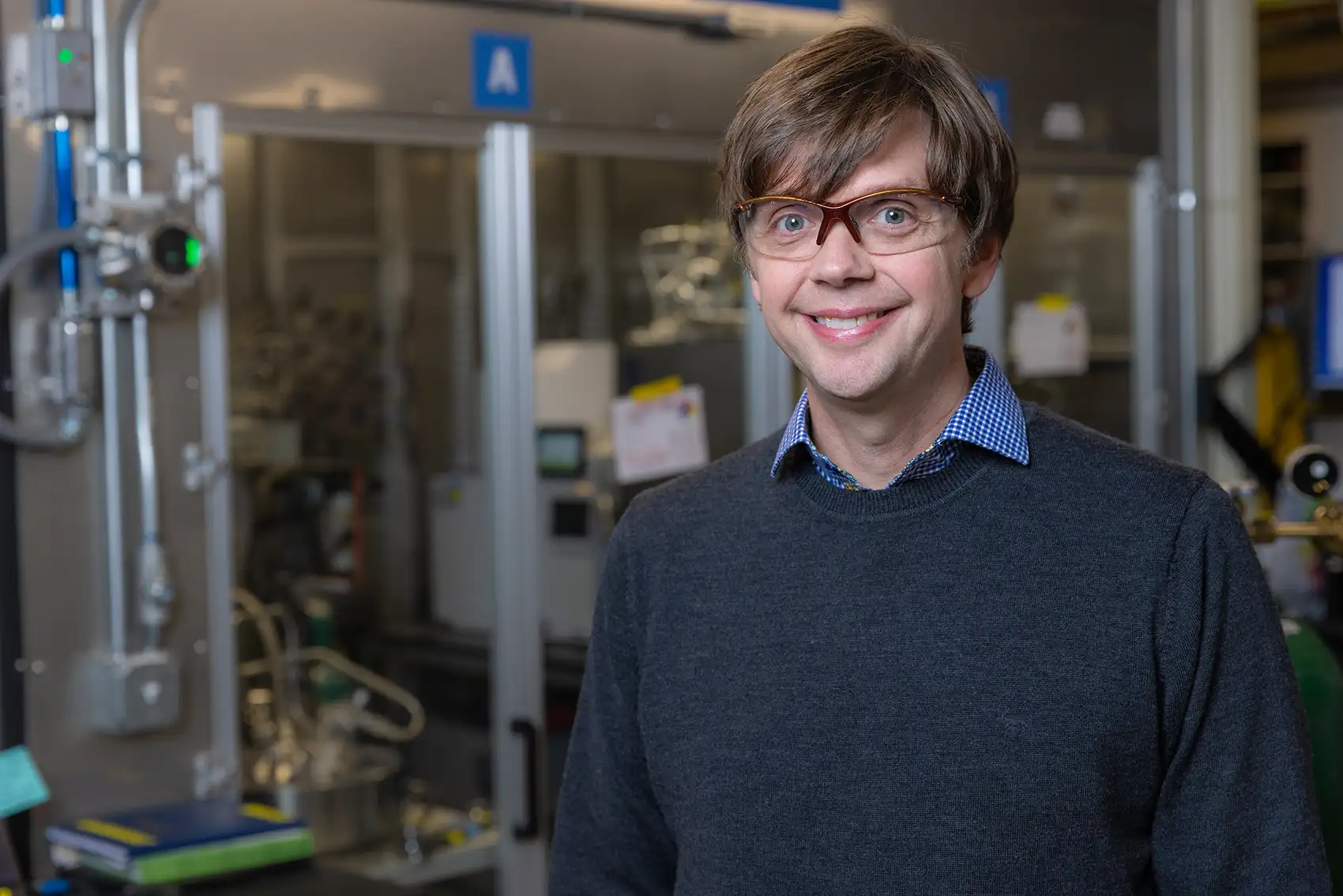
Today, at a ceremony in Washington, D.C., Senior Research Fellow Gregg Beckham received the prestigious Ernest Orlando Lawrence Award from U.S. Secretary of Energy Chris Wright.
The Ernest Orlando Lawrence Award is given to mid-career scientists and engineers in recognition of exceptional achievements, and Beckham is cited for his research in the conversion of lignocellulosic biomass and waste plastics via biology, chemistry, and engineering, yielding building blocks for fuels, chemicals, and materials.
While Beckham was the person on stage to receive the award’s iconic gold medal, he is quick to credit success during his 18 years at the National Laboratory of the Rockies (NLR) to fruitful collaborations with numerous researchers and professionals from NLR and other institutions.
“While my name is on this award, the achievements it recognizes reflect the collective efforts of many extraordinary people,” he said. “I've been fortunate to work with incredibly talented and dedicated colleagues who bring different perspectives and expertise to solving challenging problems.”
Ernest Orlando Lawrence was himself a pioneer of multidisciplinary, team-based science, bringing together researchers and engineers from different fields to tackle scientific challenges that could not be addressed by individuals working alone.
Beckham’s peers point to his similar ability to build teams from across disciplines and institutions to tackle problems that would otherwise be impossible to solve. Indeed, while his formal academic training is in chemical engineering, his name appears alongside experts in many domains: synthetic biology, chemical catalysis, and separations science, among others.
To date, Beckham has contributed to hundreds of publications with his colleagues, with sustained support from program offices in the U.S. Department of Energy Office of Critical Minerals and Energy Innovation (CMEI) and Office of Science. A throughline of those studies includes expanding our knowledge on how to efficiently deconstruct complex and heterogeneous materials like biomass and waste plastics into chemical building blocks for conversion to valuable chemicals, materials, and fuels.
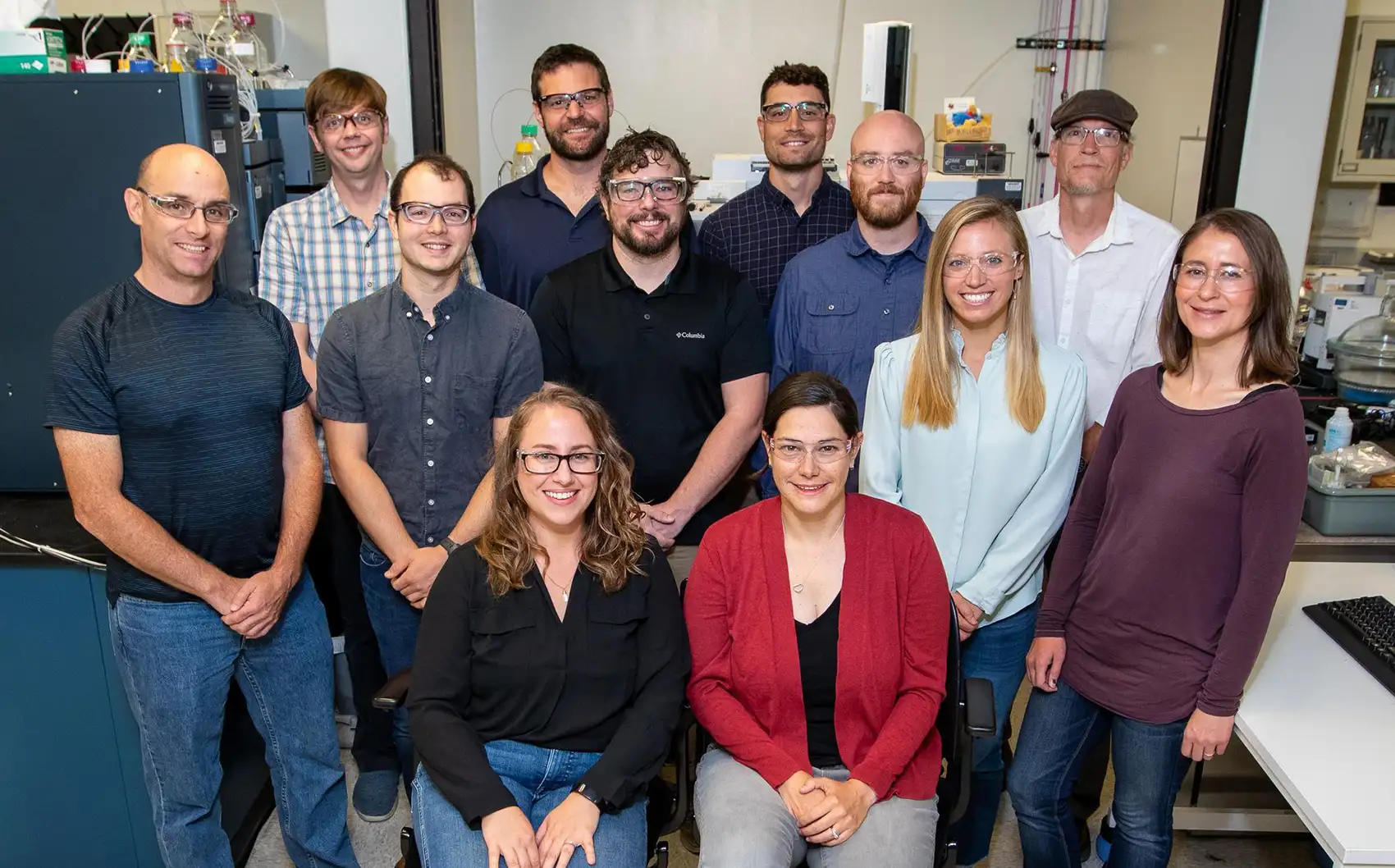
Importantly, Beckham and his collaborators have worked hard to translate their work to industry. Beckham’s collaborations have resulted in more than 44 patents, with many more filed by NLR’s Technology Transfer Office. Much of this intellectual property has since been licensed to companies that are actively working with NLR to scale up and demonstrate them for commercial use.
For example, collaborators at NLR and MIT developed a technology to convert lignin-derived compounds into drop-in aviation fuel with enhanced energy density. The technology has been licensed by Bioleum, which is working to scale up the process for potential commercial deployment.
Beckham and collaborators have also developed biological and chemical approaches to recycle waste plastics. Their work includes advances in enzymatic recycling, chemical oxidation, and solvent-based recycling of composite materials, and several of these technologies are being advanced toward commercial applications through collaborations with industry partners. Beckham helped establish and now leads the BOTTLE™ (Bio-Optimized Technologies to keep Thermoplastics out of Landfills and the Environment) consortium, funded by CMEI’s Alternative Fuels and Feedstocks Office with historical cofunding from CMEI’s Advanced Materials and Manufacturing Technologies Office.
Beyond the scientific collaborations, Beckham emphasized the essential contributions of others who help make their research efforts possible.
"Over the years, I've learned how much work goes on behind the scenes to make ambitious scientific projects successful," Beckham said. "We have amazing project management and business support teams who make so much of what we do possible. I'm incredibly grateful for their dedication and all that they do."
To date, Beckham has advised or co-advised more than 140 postdoctoral researchers and Ph.D. students. He also maintains a global network of highly productive collaborators from around the world.
“We are thrilled with what Gregg has helped build here at NLR with partners,” said Bill Tumas, NLR deputy laboratory director of science and technology. “That is the spirit of this laboratory: working together to scale up and move impactful technologies out into the world. I can’t think of someone more deserving of this honor.”
Explore NLR’s bioenergy and bioeconomy research, as well as its facilities that enable discoveries at the frontier of science and empower researchers to design and optimize biomanufacturing technologies.
Share
Last Updated Oct. 27, 2026