
The year 2025 brought a national focus on energy, and the National Laboratory of the Rockies (NLR) Energy Systems Integration Facility (ESIF) is meeting the moment. Within months, we began building out capabilities that advance key priorities for secure, reliable, and affordable power, with an added emphasis on data centers, domestic manufacturing, and bringing the benefits of artificial intelligence (AI) to power systems planning and operations. We also welcomed U.S. Energy Secretary Chris Wright and a new lab director. We look forward to the next discoveries ESIF will deliver for our partners and the nation.
Juan Torres, Associate Laboratory Director
Chad Blake, Research Operations Director
Andrew Hudgins, Acting Laboratory Program Manager

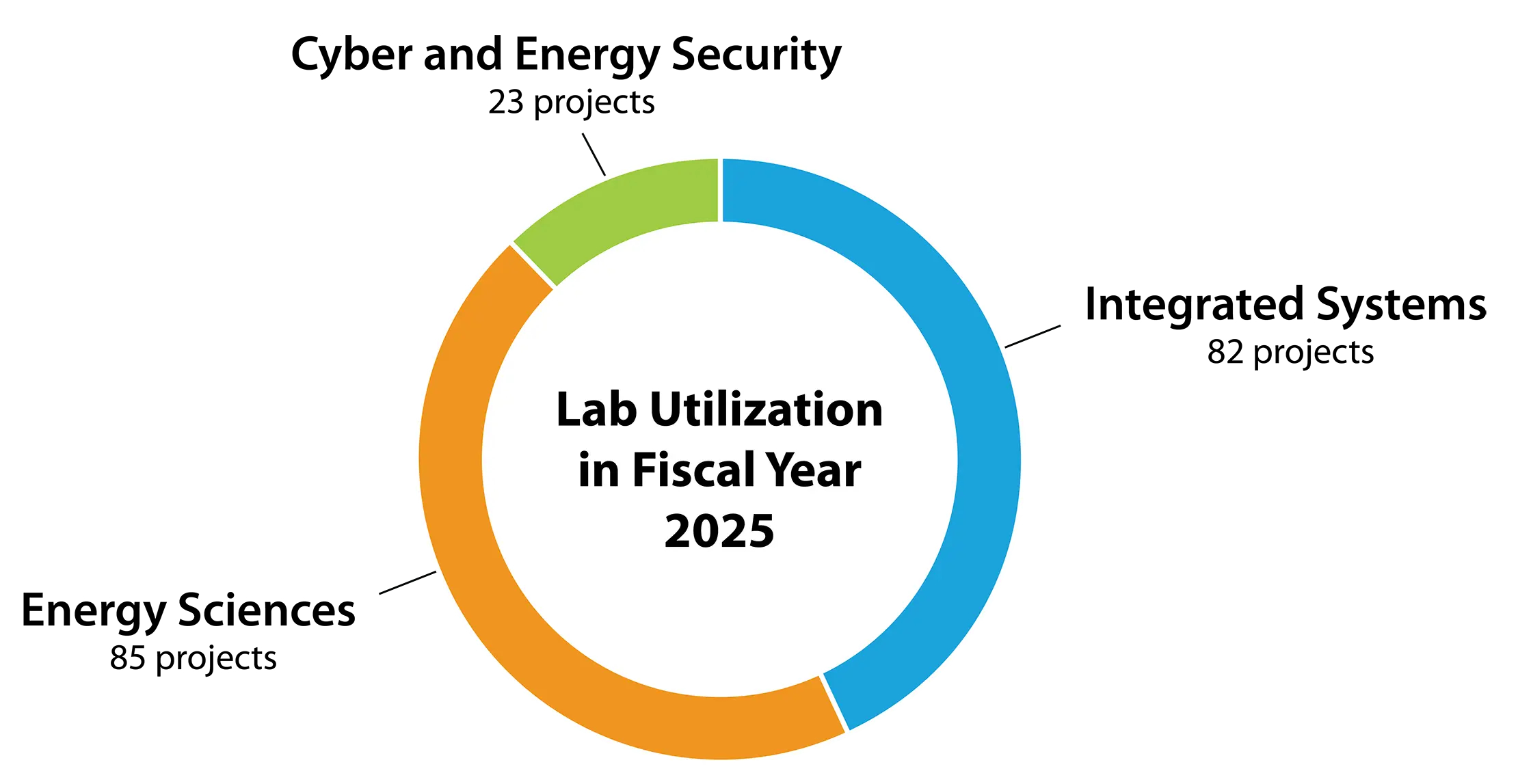
Facility Metrics at a Glance
Capability Upgrades
The National Laboratory of the Rockies closely manages the ESIF's research technologies to maximize the use of existing assets and also build new ones. Recent capability upgrades and acquisitions are already helping to meet emerging needs in the energy sector:
-

Cybersecurity reference architectures were added to the Advanced Research on Integrated Energy Systems (ARIES) Cyber Range for more rapid experimentation and greater fidelity.
-
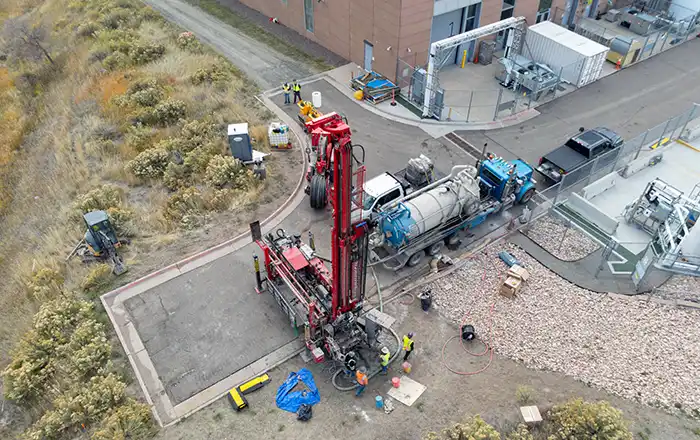
The ESIF operations team initiated an upgrade to the existing thermal research system and began designing a geothermal research network.
-
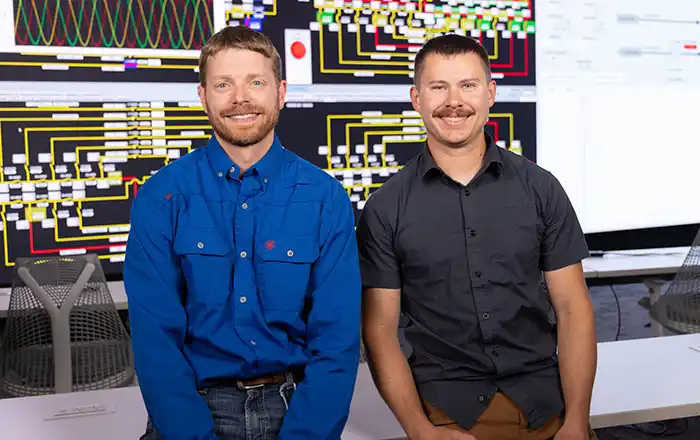
The ESIF revamped the supervisory control and data acquisition system, providing more tools for researchers and improving facility efficiency and safety.
-
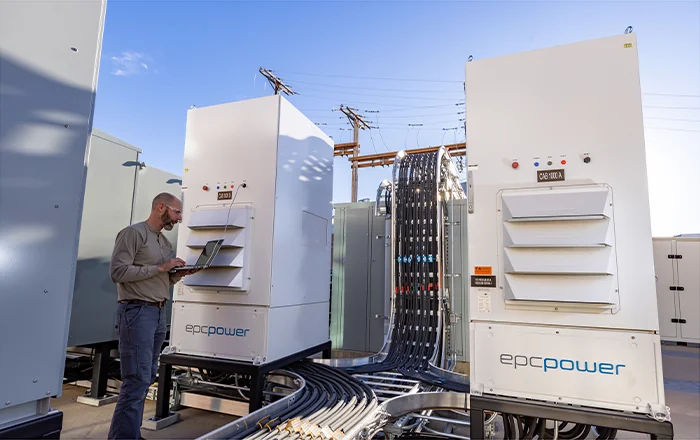
The ESIF commissioned an inverter setup with two 1.5-MVA bidirectional inverters, an AC interface capable of 480 or 13,200 volts, and a DC interface capable of 350–1,250 volts.
-
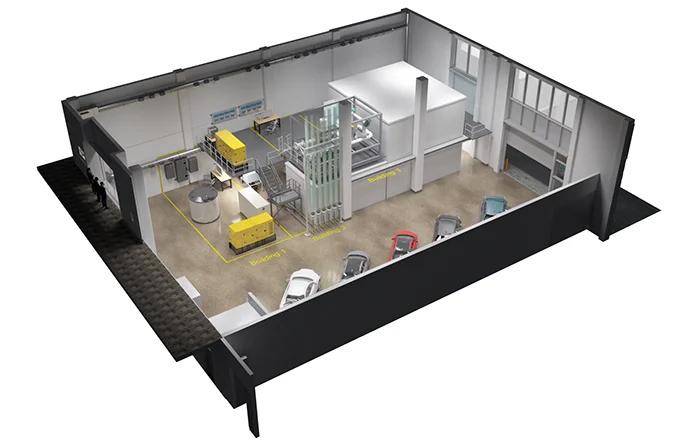
Construction began on environmental chambers used to study commercial building technologies and data center racks under varying temperatures and environments.
-
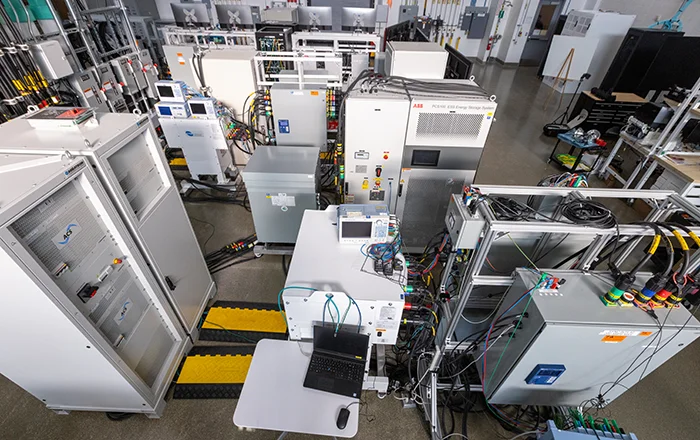
New hardware, system controls, and computing added to the Power Systems Integration Lab greatly enhanced power-hardware-in-the-loop experiments.
-
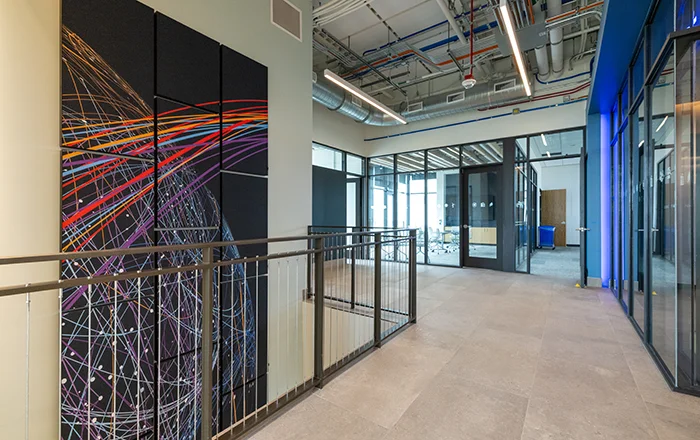
NLR established a dedicated, always-on data connection between the ESIF and NLR's Flatirons Campus to link hardware experimentation across campuses.
-
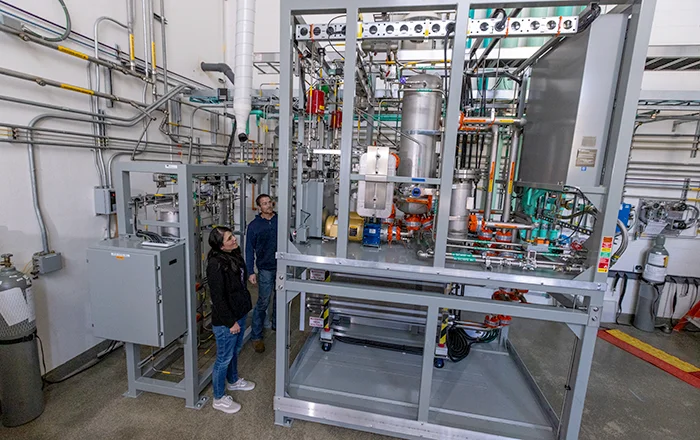
The ESIF acquired a 235-kW liquid alkaline electrolyzer that enables U.S. national labs to match hydrogen research capabilities around the world.
Capability Spotlight: High-Performance Computing Data Center
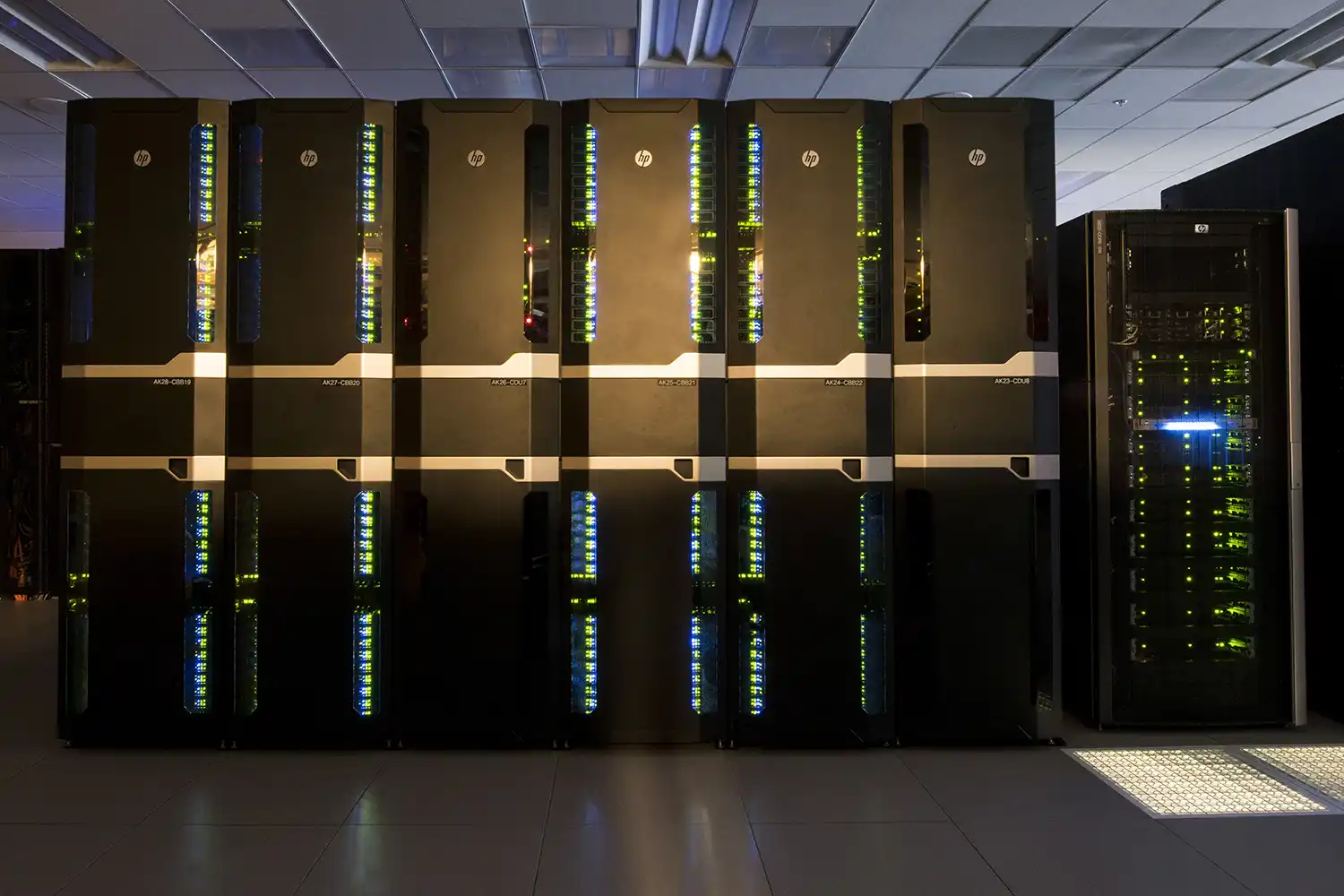
NLR's high-performance computer
supported more than 500 projects in 2025, including those expanding AI and machine learning workloads. Meanwhile,
the data center achieved an average power usage effectiveness of less
than 1.08,
which is considered highly efficient by industry standards. This
efficiency is largely attributed to warm-water liquid cooling and the maximum reuse of waste heat, which reduces heating
costs for the entire building.
NRL's expertise in data center design is amplified through the Chip-to-Grid initiative, which considers all aspects of data center planning, development, and management to optimize and balance performance, cost, and resource use while maintaining reliable operations.
R&D Impact: U.S. Department of Energy Projects
An All-Hands Approach to Cybersecurity Delivers the Strongest Defense
Protecting the energy supply chain is a collective effort. NLR broke down three key roles—product manufacturers, asset owners, and system integrators—and listed practical steps they can take to advance cybersecurity in alignment with international standards and DOE's principles for cyber-informed engineering. To vet these role-based cybersecurity profiles, researchers emulated a common type of cyberattack—a denial of service—on a modeled energy system. With the security profiles implemented, the energy devices and their communication relays were defended against the attack.
ESIF resources: ARIES cyber range with power-hardware-in-the-loop
EdgeFlex Tool Handles Smart Dispatch During Connecticut Demonstration
Flexibility is a largely unrealized feature of modern power systems, but a recent demonstration in a Connecticut neighborhood showed a path forward for utilities to reduce energy use with NLR's EdgeFlex tool. EdgeFlex leverages the latent flexibility in home energy devices by gauging each device's capacity to adjust consumption or generation and then computing the optimal dispatch schedules. Following NLR simulations, grid services company Tantalus Systems used EdgeFlex to automate water heaters and thermostats, helping United Illuminated Company better control its loads to meet reliability and affordability goals.
ESIF resource: Advanced Distribution Management System Test Bed
Medium-Voltage Experiments Usher in Era of Power Electronics
The medium-voltage domain is underused for adding generation to the grid, and it presents a promising alternative to transformers, which face supply chain constraints. As a leader in the arena of medium-voltage power electronics, NLR hosts a unique integration platform where partners test prototypes and conduct real-time simulations. The value of this platform is already apparent: NLR scientists developed an algorithm for the decentralized control of modular converters, a method to suppress inrush current and maintain operation during communication failures, and high-detail models of medium-voltage devices—all of which facilitate field adoption and standardization of power electronics.
ESIF resource: Medium-voltage indoor and outdoor test areas
Inductor for Modern Power Grid Benefits From ESIF Emulations
CorePower, a startup that makes solid-state electronics for grid, vehicle, and broad power applications, brought its product to the ESIF for high-fidelity characterization. Using a range of medium-voltage test setups, NLR engineers validated the thermal stability, power density, and power quality of the company’s flagship inductor. By emulating real-world run times at the ESIF, the startup gained confidence in the market potential of its technology and its role in strengthening domestic manufacturing.
ESIF resource: Medium-voltage indoor and outdoor test areas
Open-Source Algorithms for Networked Microgrids Ready for Widespread Adoption
With the closeout of the DynaGrid project, utilities and companies have access to a robust method for running futuristic networked microgrids. The open-source algorithms on GitHub allow grid operators to partition their systems into interlocking, self-organizing microgrids that serve user-defined performance objectives, such as reliability, cost savings, or recovery from outages. The first prospective user of the DynaGrid method is the urban U.S. utility DTE, which plans to sectionalize its grid into multiple distinct customer bases.
ESIF resources: High-performance computing, grid simulation
R&D Impact: Industry Partner Projects
NLR and Newmont Turn Mining Residuals Into Construction Material
Through the Rapid Electrochemical Mineralization to Form Dolomite (REMineD) project, mining partner Newmont is helping NLR develop a new mineralization process that turns mining tailings into construction materials. As a first step toward commercialization, the masonry company Colorado Earth will form the product into building blocks, and concrete manufacturer Blue Planet Systems will explore its use as an alternative concrete. NLR performs electrochemical methods of forming carbonate minerals and potentially precipitating critical minerals as a by-product.
ESIF resource: Energy science labs
Artificial Intelligence Finds Power Line Faults Before Wildfires Spark
Utilities have long struggled to sense high-impedance faults, instead relying on precautionary public safety power shutoffs to prevent potential sparks during certain weather conditions. But through sensing, learning, and edge implementation, AI could finally identify such faults. NLR developed an AI method in the lab, trained against real-world fault data provided by Eaton, that can detect high-impedance faults with greater than 90% accuracy. The AI solution is now poised for deployment by utilities across the country.
ESIF resources: High-performance computing, grid simulation
NLR and Schneider Evaluate Smart Panel for Reducing Home Energy Costs
Schneider Electric partnered with the ESIF to evaluate the capabilities of its smart breaker panel, the Pulse Panel, and then used simulations to demonstrate grid-level impacts. The panel controls can turn off large loads during high-price periods or maintain whole-home power below the home's electrical capacity to avoid costly utility upgrades. NLR's researchers are using laboratory data and advanced modeling to measure the benefits that the Pulse Panel could provide to homeowners and utilities.
ESIF resource: Systems Performance Lab residential research resources
NLR Engineers Test Emergency Heating Solution for Arctic Military Base
Electric thermal storage is a method that heats bricks or ceramics when electricity is inexpensive and releases that heat when electricity is costly—or lost entirely. NLR researchers are assessing this solution in the lab before it is deployed at a large U.S. military base in Alaska. NLR acquired an electric thermal storage product to run through baseline and outage scenarios, which will inform the base's installation of the product alongside a PV system. Project partner Siemens is helping to coordinate the building controls.
ESIF resources: Thermal research system, Systems Performance Lab residential research resource
Xcel Energy Study Shows How Smart Charge Management Could Reduce Infrastructure Upgrades
Over two years, NLR conducted a granular grid analysis of Xcel Energy’s distribution network in two service areas all the way down to the low-voltage lines that serve customers at the neighborhood level. Researchers then added projections for electric vehicle (EV) adoption and where EV users are likely to charge. The analysis allowed Xcel Energy to see how local grid networks could be affected by different EV loads and how different smart charge management strategies can balance those loads while ensuring affordability for ratepayers. NLR researchers also developed the open-source EVI-DiST tool to bring this solution to utilities nationwide.
ESIF resource: Electric Vehicle Research Infrastructure
Partnerships and Engagement
New Partnership Funding By Sector
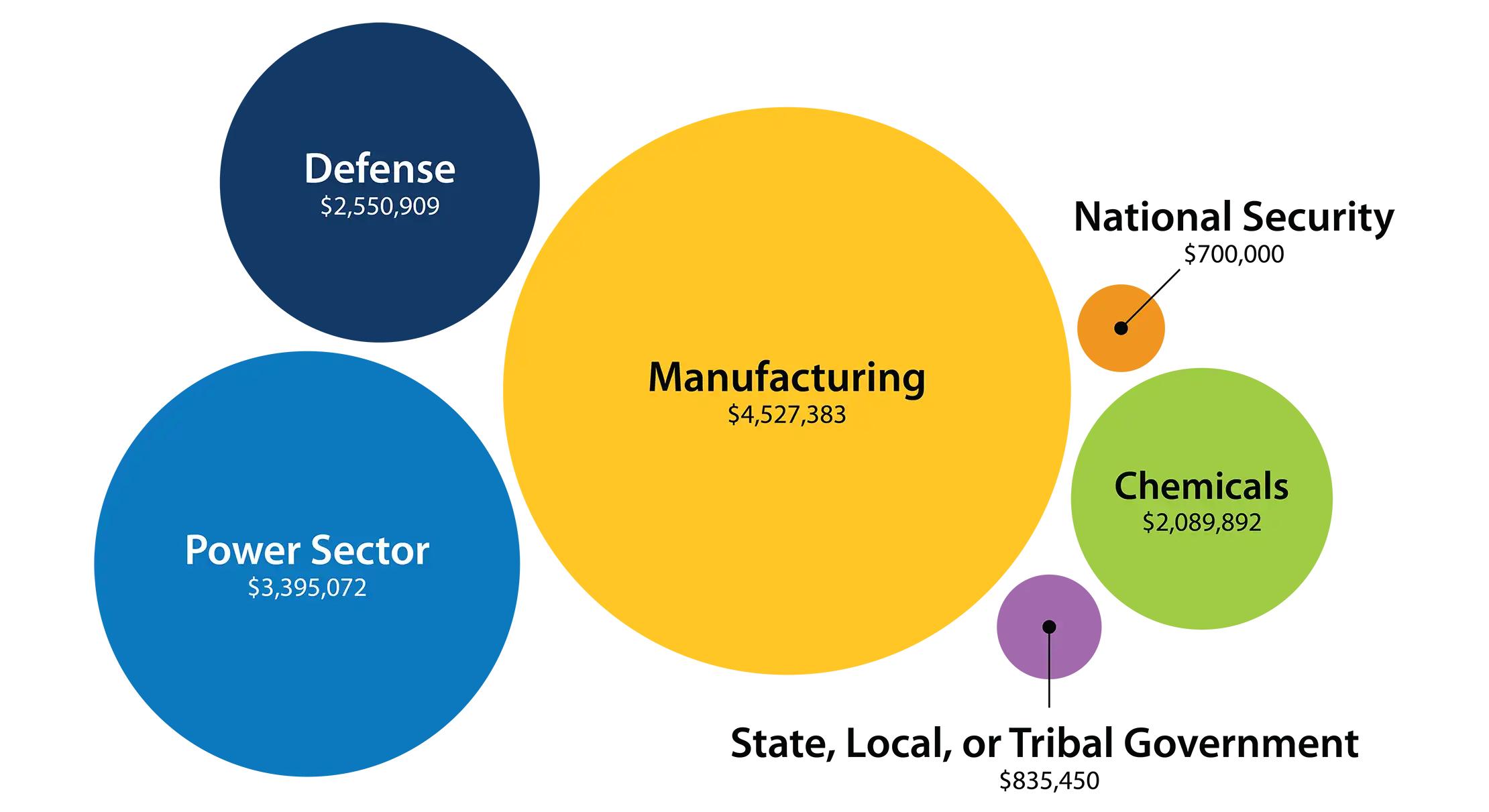
Scroll down to see the full list of partners.
Industry and Nonprofit Partners
1s1 Energy
AES Corporation
Alleima
Analog Devices Inc.
Avangrid Inc.
Berkshire Hathaway Energy
BioSIPs Inc.
Carrier
Chemours
Chevron
Colorado Earth
Colorado Springs Utilities
Connexus Energy
Consolidated Edison Inc.
CORE POWER
Cummins Inc.
Dominion Energy Inc.
Eaton Corporation
EGM LLC
Electric Power Research Institute
Electricity Information Sharing and Analysis Center
ElectroFueled Inc.
Element One Inc.
Florida Power & Light Company
Fortescue Future Industries
GTI Energy
GE
Hawaiian Electric Co.
Homerun Resources
Honda
Hunt Energy
Hyundai America Technical Center Inc.
La Plata Electric Association
Latimer Controls
Mott Corporation
National Alliance for Water Innovation
NEC Laboratories America Inc.
Nel Corporation
Newmont Corporation
NextEnergy Inc.
NextEra Energy
North Carolina Electric Cooperatives
Opus 12
Paulsson Inc.
Pax Scientific
Plug Power Inc.
Plus Inc.
PPG Energy
Schaeffler Group
Schneider Electric
Shell
Smarter Grid Solutions Inc.
Southern California Gas Company
Solid Carbon Inc.
Southern California Edison
Southern Company Services Inc.
Southwest Airlines Renewable Ventures
Spirae
Survalent
Tantalus Inc.
TotalEnergies
United Power Inc.
Vermont Energy Investment Corp.
Verrus
Wilsonville Concrete Products
Xcel Energy Inc.
Zero Emission Industries
Academic Partners
Colorado School of Mines
Cornell University
Iowa State University
Rice University
University of California, Irvine
University of Georgia
University of Virginia
University of Washington
State, Local, and Tribal Partners
Borrego Springs, California
Molokai, Hawaii
Quapaw Nation
Sitka, Alaska
DOE Partners
Argonne National Laboratory
Idaho National Laboratory
Lawrence Livermore National Laboratory
National Energy Technology Laboratory
Oak Ridge National Laboratory
Pacific Northwest National Laboratory
Advanced Materials and Manufacturing Technologies Office
Advanced Research Projects Agency-Energy
Bioenergy Technologies Office
Building Technologies Office
Energy-to-Grid Integration
Grid Modernization Initiative
Hydrogen and Fuel Cell Technologies Office
Industrial Technologies Office
Office of Cybersecurity, Energy Security, and Emergency Response
Hydrocarbons and Geothermal Energy Office
Office of Electricity
Office of Science
Strategic Programs
Solar Energy Technologies Office
Vehicle Technologies Office
Water Power Technologies Office
Federal Partners
U.S. Department of Defense
U.S. Department of Transportation National Highway Traffic Safety Administration
Knowledge Sharing
U.S. Electricity Subsector Coordinating Council
In October 2024, ESIF hosted the U.S. Electricity Subsector Coordinating Council for the second such visit held at a national laboratory.
New Tools and Grid Controls
More than 60 representatives from utilities, vendors, and software developers convened at the Federated Architecture for Secure and Transactive Distributed Energy Management Solutions Workshop for Advanced Distribution Management System Test Bed demonstrations of new DOE-funded tools and explored grid controls that optimize distribution system performance, costs, and reliability.

Securing the Future Electric Grid
NLR hosted a cybersecurity workshop for utility and nonutility actors emerging from new energy sector business models, including virtual power plant operators and aggregators.
Partner Forum on Powering Data Centers
A two-day forum brought together more than 300 experts focused on meeting rising data center energy demand. ESIF presentations highlighted support for partners ranging from whole-system analysis to real-power demonstrations.

Energy Threat Analysis Center
Led by the DOE Office of Cybersecurity, Energy Security, and Emergency Response, the Energy Threat Analysis Center facilitates in-person collaboration between government and energy sector partners to secure critical energy infrastructure. Seven core partners are co-located at the center in ESIF to use the ARIES Cyber Range and other capabilities.

ChargeX Consortium
Through the ChargeX Consortium, NLR and partner laboratories have improved the customer experience with public EV charging infrastructure—for example, by introducing an automated solution to address a common reliability issue.

Scientific Discovery through Advanced Computing (SciDAC) Institute
In a competitive solicitation by the U.S. Office of Science, NLR joined a new SciDAC institute led by the Pacific Northwest National Laboratory to advance applied mathematics and computer science in support of current energy challenges.
Universal Interoperability for Grid-Forming Inverters (UNIFI) Consortium
NLR continues as co-lead of the UNIFI Consortium, which unites research and industry partners to advance the research, standards, and deployment of grid-forming inverters. ESIF has served as the home base for much of UNIFI's work, including a megawatt test bed connecting inverters from different vendors.
Looking Ahead
Preparation is a hallmark of strong energy systems, which is why the capabilities at the ESIF help partners assess their readiness—for the next investment, the next threat, or the next technology. This ability to test-drive future scenarios is now increasing in sophistication using AI, visualization, and emulation tools.
Two new capabilities define this approach: the control room of the future and a platform called Active Response Control Around Disruptive Events. The first puts partners in the operator's chair, where they can customize and analyze power grid configurations and explore AI for grid operations—the subject of the ESIF's most-downloaded publication of the year. The second supports tabletop exercises in which users take tangible actions to mitigate disruptive events. Both add proactive planning to energy system management.
Options and risks abound in the energy sector, but with ESIF's capabilities, research, and tools, preparation is possible.
Technical Outputs and Publications
Top 10 Most Downloaded Publications
- Generative AI for Power Grid Operations
- Vulcan Test Platform: Demonstrating the Data Center as a Flexible Grid Asset
- Colorado Alternatively Powered Aircraft Airport Infrastructure Study
- Performance Evaluation of a Single-Phase Grid-Forming Inverter Through Hardware Experiments: Preprint
- Clean Energy Cybersecurity Accelerator: Cohort 2—Asimily Public Report
- Equivalent-Circuit Models for Grid-Forming Inverters Under Unbalanced Steady-State Operating Conditions: Preprint
- Interconnected Risks in Electricity Systems: Understanding Research Challenges, Needs, and Partnerships
- An Introduction to the Federated Architecture for Secure and Transactive Distributed Energy Management Solutions: Preprint
- A Generic and Multi-Functional Electromagnetic Transient Model for Grid-Following Inverter: Preprint
- Benchmarking Performance: A Round-Robin Testing for Liquid Alkaline Electrolysis
The journal article Overcurrent Limiting in Grid-Forming Inverters: A Comprehensive Review and Discussion became the second most downloaded and cited publication of the year on the IEEE Transactions on Power Electronics website and won a First Place Prize Paper Award.
Fiscal Year 2025 Software Records
| Software Record Number | Software Record Name |
|---|---|
| SWR-25-04 | Seamless microgrid transition operation |
| SWR-25-03 | Practical secondary control of microgrid with multiple GFM inverters |
| SWR-25-07 | Electric Vehicle Infrastructure - Energy Estimation and Site Optimization Tool in Python (EVI-EnSitePy) |
| SWR-25-08 | A power-hardware-in-the-loop interface for varying grid impedance and strength |
| SWR-25-09 | SiM4DC |
| SWR-25-22 | Hybrid and Optimized Energy and Power Management for DC Distributed EV Charging Hubs (HOPE) |
| SWR-25-24 | Artificial intelligence based electromagnetic transients modeling of inverters (AI-EMT) |
| SWR-25-40 | ARIES Interconnection Automation |
| SWR-25-47 | Battery Heat Output Machine Learning Tool |
| SWR-25-56 | Implementation of ISO 15118-202 messages within Everest EV Charging Open Source Framework |
| SWR-25-60 | Electric Vehicle Integration - Distribution System Integration Tool (EVI-DiST) |
| SWR-25-107 | Sequence Diagrams & PFMEA Table - VGI |
| SWR-25-145 | Machine learning approaches for black-box modeling of power conversion system dynamics |
| SWR-25-177 | Graphics Processing Unit Accelerated Background Oriented Schlieren Algorithm |
| SWR-26-007 | Integrated System for Optical Hydrogen Detection Using Background Oriented Schlieren and Machine Learning |
Download the Executive Summary of ESIF Fiscal Year 2025 Accomplishments
Learn more about the NLR facilities that make ESIF research possible:
Share

Last Updated July 1, 2026