
Least-Cost, Reliable Power
NLR helps utilities and system operators explore cutting-edge approaches to balancing costs and other priorities for reliable power under a rapidly evolving and growing grid.

One factor driving energy affordability—how well households can meet their energy needs financially—is the cost of power. The cost of power reflects investment and operation decisions that system operators and utilities make to meet demand. These investments are informed by planning exercises that predict customer needs and future challenges as well as by responses to real-world conditions.
Least-Cost Planning in Iowa
An NLR analysis provided a foundational assessment of how distribution utilities in Iowa approach resilience planning, with a focus on flood risk. To help utilities proactively prioritize investments that minimize flood impacts, NLR used two tools: Energy Resilience Analysis for electric Distribution systems (ERAD) and Capacity Expansion Decision Support for Distribution Networks (CADET). ERAD overlays flood hazard data with feeder and substation layouts to identify exposed assets and to estimate failure probabilities using fragility curves. CADET then optimizes hardening investments to minimize the combined costs of upgrades and expected outages across probabilistic flood scenarios.
NLR can help electric utilities, system operators, and others address issues associated with the rising cost of power. Our tools support in-depth analysis to identify driving factors and support cost-effective grid modernization decisions that maintain affordability and reliability.
Questions we can help stakeholders answer include:
- What are new technologies or operational strategies that can lower grid costs, and how would they impact different customers?
- What technologies might customers adopt to lower their individual energy bills? How would widespread adoption of these technologies influence the cost of maintaining a reliable grid and the bills of customers who do not adopt them?
- What utility rate and program design options can most effectively improve energy affordability in a utility's service territory? How would each option align with regulatory priorities, impact customer bills, and influence customer adoption of different distributed energy resources (DERs)?
Capabilities
NLR's capabilities and tools cover all aspects of the investment planning process for the power grid. This process includes identifying strategies and technologies to meet customer demand in operations and planning and analyzing electricity rates and their consumer impacts, considering a range of future load forecasts. This research helps de-risk decision-making so stakeholders can confidently invest in and deploy infrastructure and strategies that meet traditional priorities of least-cost, reliable power as well as new priorities around durability and state energy policies.
Bulk power system infrastructure can represent significant and long-lived investments whose installation and operation contribute to consumer costs. NLR supports capacity expansion planning to chart least-cost pathways to reliably meet demand under a range of future scenarios and explore a variety of potential technologies to do so. NLR also provides power systems modeling and analyses to de-risk investments and operation strategies prior to actual deployment, helping build stakeholder confidence in potential solutions.
NLR's bulk power system tools cover the full spectrum of planning and operational horizons that system operators and utilities need to evaluate before making investments in new infrastructure or capabilities. They can be used individually or in tandem to evaluate the most cost-effective actions that utilities can take to meet growing and changing demands for electricity.
NLR can help distribution grid planners understand the factors and investment strategies for maintaining a reliable and cost-effective distribution grid. Our research and analysis capabilities allow planners to compare novel technologies and approaches against more traditional distribution investments across a range of operating conditions. Our analysis also accounts for distribution system safety and security in the face of natural disasters. NLR analysis helps validate decisions around identifying and comparing long-term distribution investment strategies across technology options that simultaneously consider and balance reliability, affordability, and other priorities.
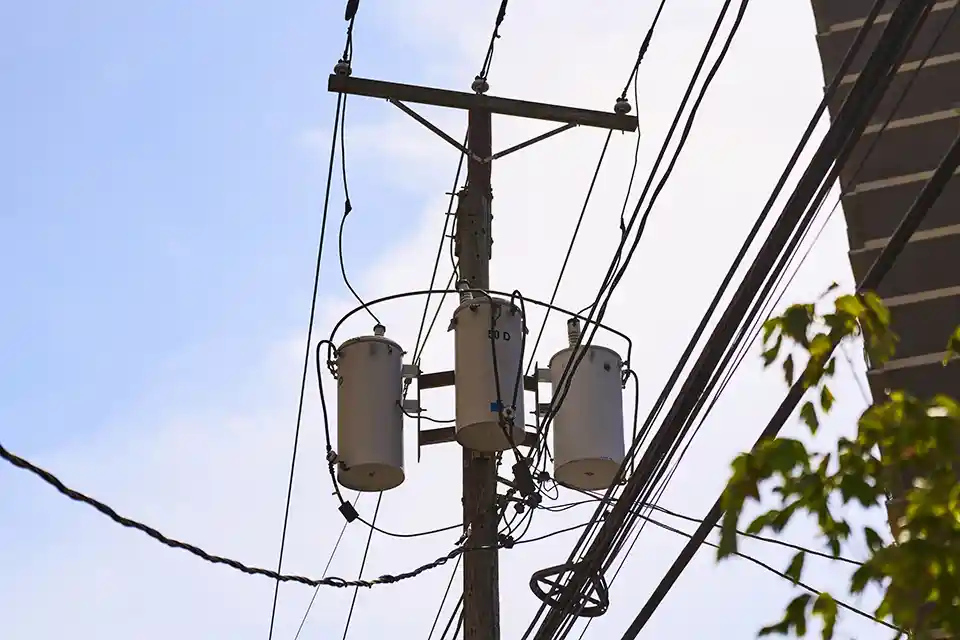
Grid planners and operators are increasingly navigating customer adoption of DERs. DERs cover technologies for customer-sited storage, generation, energy efficiency, and load flexibility. Consumers invest in these technologies for many reasons, including the potential to reduce bills. The addition of these resources to the grid represents both challenges and opportunities for grid planners and operators. Before these resources can be leveraged to help the grid, however, planners and operators must be able to trust they will behave in predictable, beneficial ways and not worsen issues on the grid. NLR uses its modeling and hardware-in-the-loop capabilities to evaluate scenarios and validate DER performance in real-world settings, providing stakeholders with the confidence and information they need to make robust, cost-effective decisions.
NLR's Advanced Research on Integrated Energy Systems (ARIES) platform can validate models by emulating an actual grid's response to changes in grid infrastructure, demand, and loads, with connected physical and digital equipment at NLR facilities. ARIES is the U.S. Department of Energy's most advanced energy systems research platform—offering unmatched scale and complexity to accelerate the validation of secure, affordable, and integrated technologies across the country's energy sectors.
NLR's Advanced Distribution Management System Test Bed helps users evaluate existing and future advanced distribution management systems, distributed energy resource management systems, and other utility management system applications in a realistic laboratory environment.
Tools
NLR researchers use these tools to evaluate least-cost, reliable power options:
The Regional Energy Deployment System (ReEDS™) is NLR's flagship capacity expansion model for long-term grid planning. It can help system planners understand least-cost pathways to meeting future conditions they plan for.
Sienna is a scalable, open-source platform for power system modeling that can help planners understand which technologies and operational practices can reliably and affordably meet future conditions.
NLR's Probabilistic Resource Adequacy Suite (PRAS) offers state-of-the-art probabilistic assessment tools that capture uncertainties in grid operations—a critical step for confirming that least-cost power systems, developed using tools like ReEDS and Sienna, also meet reliability requirements.
NLR's Capacity Expansion Decision Support tool for Distribution Networks (CADET) creates a set of investment strategies for grid planners to assess, including timing, cost, and potential co-benefits.
NLR's Energy Resilience Analysis for electric Distribution systems (ERAD) on GitHub enables users to understand the impacts of natural hazards such as earthquakes and flooding and evaluate the effectiveness of different resilience strategies, which can inform investment prioritization.
NLR has a range of tools that offer multiple approaches to model the operation and behavior of DERs, including technologies for energy efficiency, on-site generation and storage, and transportation. When used in conjunction with the above planning and operations models, these tools can help planners understand how customer decisions interact with the bulk power system, including their impact on operational and investment costs:
FLARE: The Flexible Load Aggregator and Risk Estimator
OCHRE™: Object-oriented Controllable High-resolution Residential Energy model
EVI-DiST: Electric Vehicle Infrastructure – Distribution System Integration Tool
EDGES: Enabling Distributed Generation Energy Storage Model
EVI-FAST: Electric Vehicle Infrastructure – Financial Analysis Scenario Tool
TEMPO™: Transportation Energy & Mobility Pathway Options Model.
NLR's CAIRO: Customer Affordability, Incentives, and Rates Optimization Model can help stakeholders evaluate the effects of different rate structures, bill assistance programs, and DER compensation mechanisms on all customers.
View Publications on Least-Cost, Reliable Power
NLR researchers publish journal articles, conference papers, and reports about least-cost, reliable power.
Contact
Share

Last Updated Sept. 8, 2026