
Transmission Planning
NLR's transmission integration research tackles the challenges of integrating energy technologies into the bulk power system while maintaining safe, efficient, and cost-effective grids.
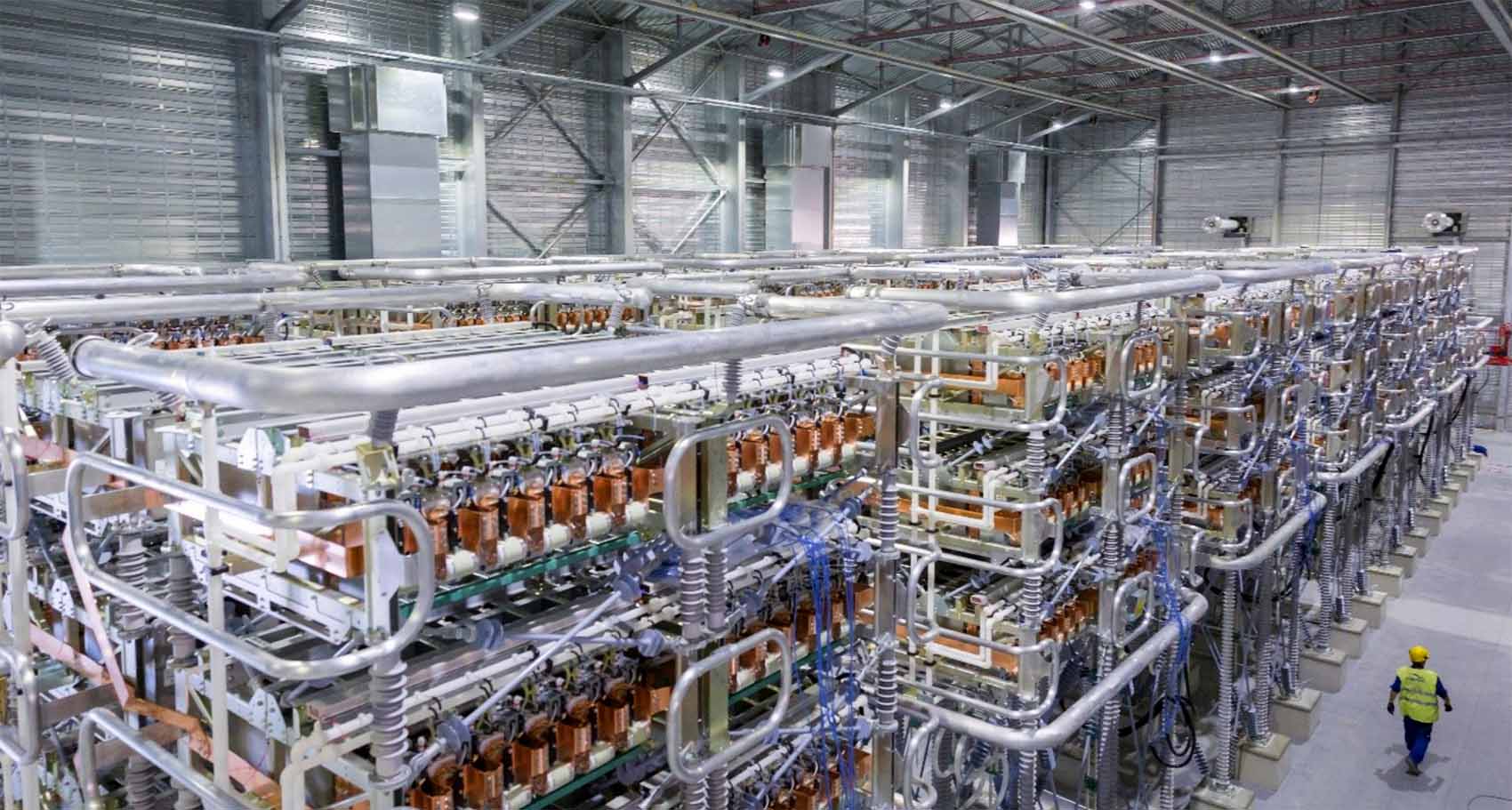
Inside a converter station of a high-voltage direct current transmission link. Photo from Siemens
As the power sector continues to evolve, transmission system planning needs to evolve with it. Integrated transmission system planning examines how transmission infrastructure affects grid reliability and costs for electricity customers.
From highly detailed power flows to contingency and stability analysis, to national-scale planning studies, NLR advances understanding of the role and value of transmission in future power systems. NLR power system engineers and analysts have developed a deep understanding of regulatory design and wholesale power markets by working closely with independent system operators and regional transmission operators, electric utilities, policymakers, and other industry partners. The resulting data, analysis, and insights enable stakeholders to make informed decisions about the future of regional and interregional transmission. Some of the questions NLR is studying are:
How can we maximize existing transmission rights-of-way using modern tower and conductor configurations, high voltage direct current network designs, or other grid-enhancing technologies?
What innovative methods can be used for planning and operating interregional transmission networks?
How could a significantly expanded transmission system deliver broad benefits to electricity customers?
How could increased transmission capacity help keep the lights on during weather-driven events?
Capabilities
Transmission planning capabilities include:
Power systems simulation – Expertise in large-scale grid integration studies, such as capacity expansion, production cost, dynamic modeling, and reliability planning
Transmission system planning – Expertise in the planning of the bulk power system, from generation, transmission, and storage capacity expansion modeling to nodal production cost and power flow simulations
Transmission and distribution system co-simulation – Expertise in the co-simulation of combined transmission and distribution systems to gauge the impact of distributed energy resources on the bulk system and how bulk system operations impact distributed energy resources.
Grid-Enhancing Technologies
Grid-enhancing technologies (GETs) can increase the capacity of existing transmission infrastructure faster and at lower cost than building new infrastructure. Examples include dynamic line ratings, topology optimization, advanced power flow controllers, and advanced conductors. These tools can ease congestion in the near term while new transmission is planned and built. They supplement transmission network expansions such as new overhead lines and substations, and their value depends on the existing conditions and layout of each network.
NLR researchers use leading modeling and analysis tools to measure the real benefits GETs can deliver to a given system and to help grid operators and public utility commissions decide where and when to deploy them.
NLR researchers are supporting effective, strategic investments in GETs by:
Providing technical assistance support for utilities, regional reliability coordinators, public utility commissions, and state energy offices, such as the Virginia Department of Energy, to understand options for using GETs to meet rapidly growing demand from large loads
Estimating the benefits of dynamic line ratings on high-voltage transmission lines across the contiguous United States
Understanding the role and suitability of GETs, considering specific grid conditions at a state and national level
Establishing the appropriate size and location of GETs using optimization-based algorithms
Contributing to the broader industry knowledge base on the adoption of GETs
Supporting the integration of GETs into existing transmission planning models and processes.
Transmission Planning and Grid-Enhancing Technologies Publications
Browse publications about transmission planning and grid-enhancing technologies.
Contact
Share

Last Updated Sept. 10, 2026