
AI Research Digs Deep Into Mining Operations
National Laboratory of the Rockies Researcher Ryan King Uses Artificial Intelligence Models To Optimize and Scale Mining Processes

When you turn on a lamp, send a text message, or fly on an airplane: You have just relied on materials made from critical minerals.
Critical minerals are key building blocks for many technologies people use every day and are essential to U.S. economic security. However, the supply chains for obtaining them are vulnerable to disruption.
To safeguard the country’s economic competitiveness and enhance affordability, National Laboratory of the Rockies (NLR) researchers are working on new methods to shore up critical minerals discovery, mining, and processing into materials and eventually devices.
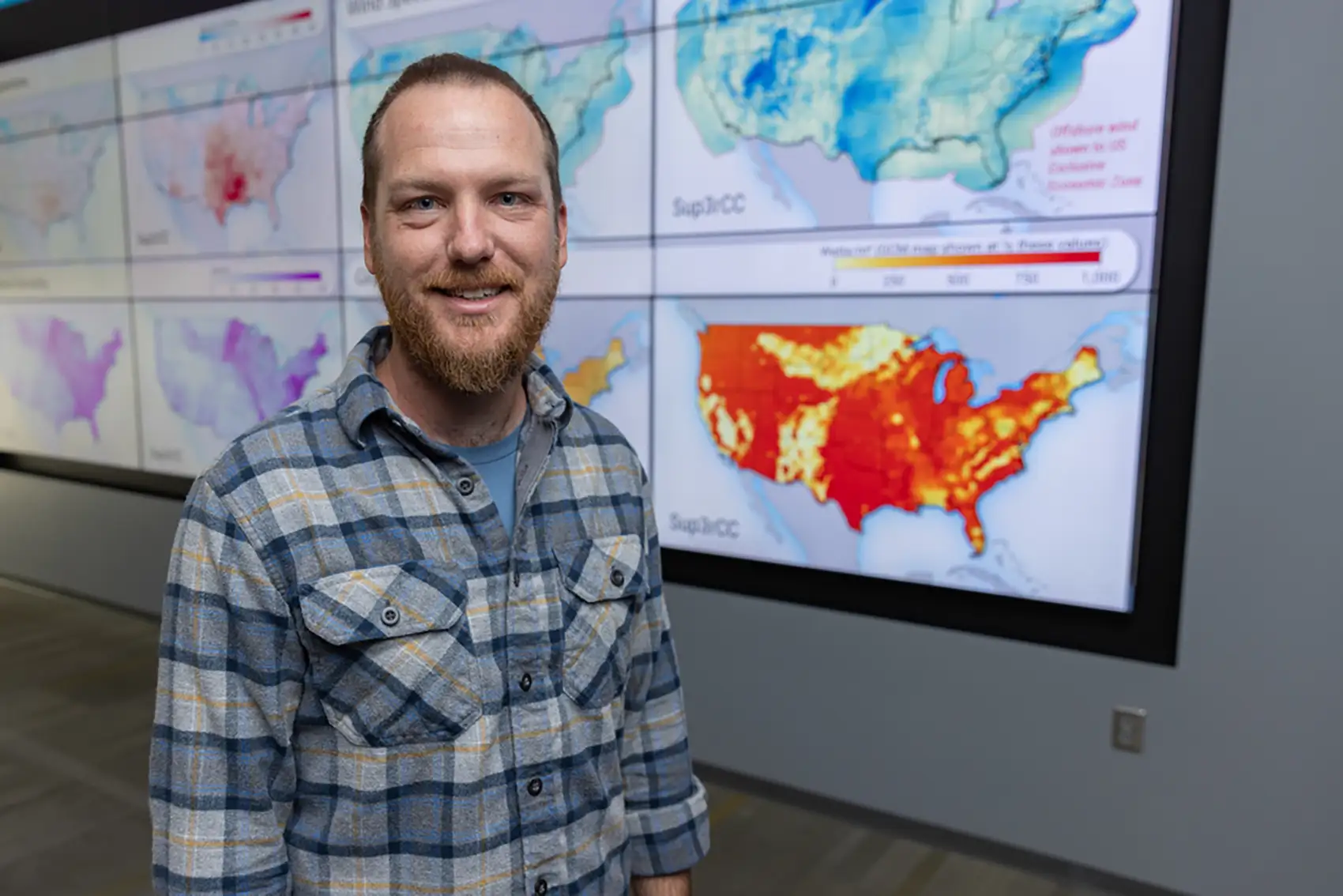
“There is a need for more flexibility in the way we approach critical minerals,” NLR computational science researcher Ryan King said. “My goal is to find ways to contribute to the supply chain durability and technological innovation with these critical assets.”
King’s background is in fluid dynamics and mechanical engineering, and he enjoys using artificial intelligence (AI) to tackle “thorny” applied science problems for complex energy systems and natural resources, from batteries and power generation systems to the grid as a whole. Supported by NLR’s high-performance-computing capabilities, King’s work contributes to accelerating critical mineral processes both locally and on a larger scale as part of the U.S. Department of Energy’s Genesis Mission initiative.
AI Research Goes From Desk to Iron Mine
Ore extraction and processing require the assistance of dinosaurs—not Tyrannosaurus rexes or velociraptors but heavy machinery with iron teeth that can take years to approve, install, and operate.
“In these slow-moving industries, you install processing equipment and it stays the same for generations,” King said. “But supply chains evolve rapidly, and technological or materials innovation can change the type of feedstocks that are needed. At the same time, higher-grade resources may be used up, and we need to then make use of lower-grade resources, or we need to accommodate for geopolitical supply shocks. This means we’re looking for AI solutions in mineral processing that can create output flexibility or absorb input volatility.”
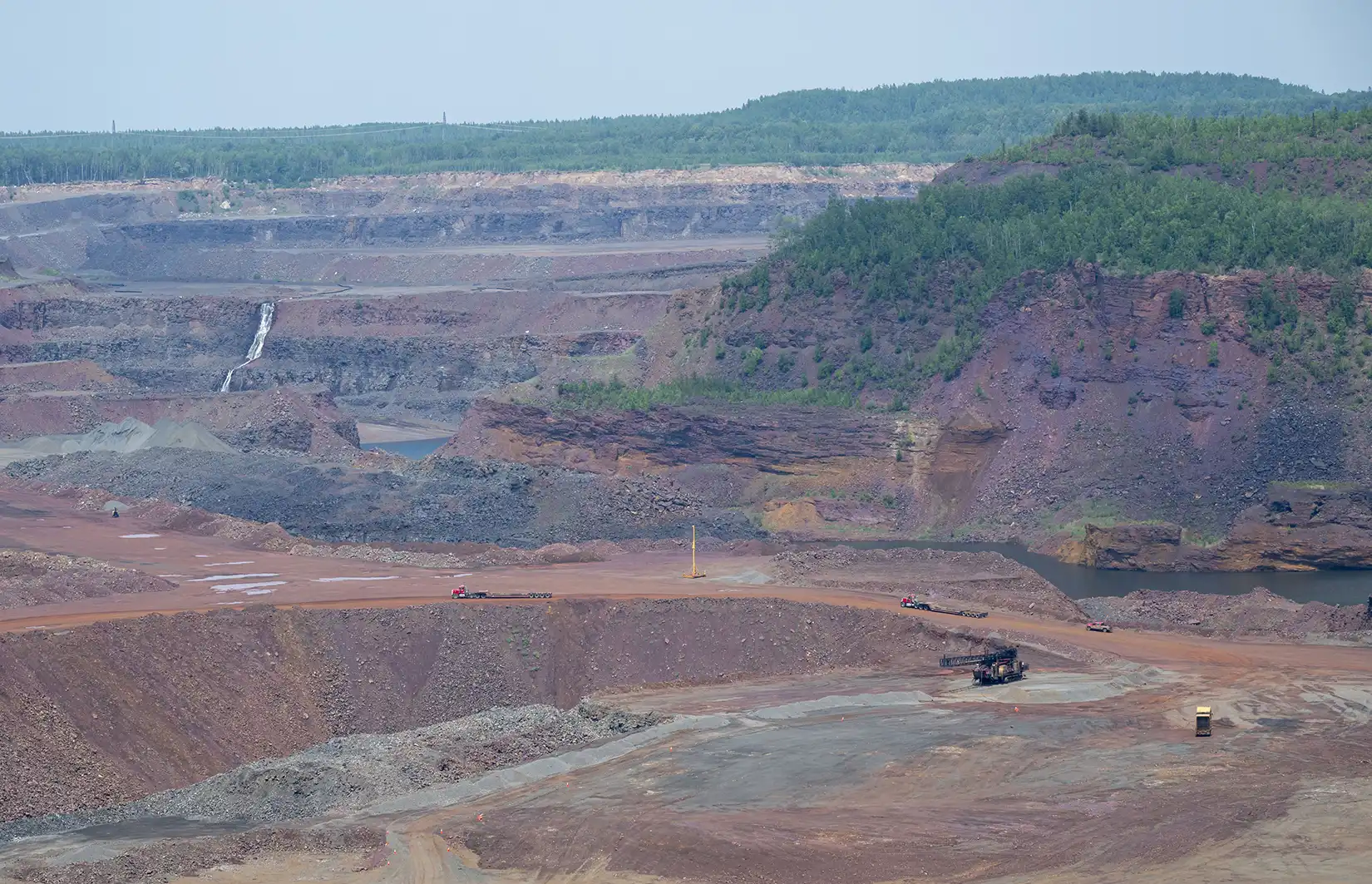
King lives in Minnesota, which is the largest producer of iron ore in the United States. With over a century of mining in the state’s Mesabi Iron Range, Minnesota has a wealth of local knowledge and expertise in mining and processing of natural resources. King’s proximity to the action has opened partnership opportunities and given him access to data, equipment, and perspectives that he may not have been exposed to otherwise. This access is a boon to his work building AI models, as it enables them to be trained on real-world data and validated by industry experts.
Through a partnership with the University of Minnesota’s Natural Resources Research Institute (NRRI), NLR is working to improve resource efficiency, natural resource modeling/management, and workflows in iron ore processing. AI can potentially help adjust processing steps based on the iron’s intended end product, which can require different purities for use in different applications. Though iron is not classified as a critical mineral today, it is a key component for manufacturing steel used in building construction and transportation. In addition, advanced iron products are finding applications in emerging technologies including battery and magnet compositions. AI methods developed in this work can also be applied to the production of other minerals.
“Working with researchers at NRRI has been a gateway into the larger world of mining and critical minerals processing,” King said. “We’re exploring how we can build AI models for all different steps in the process, and, in a lot of ways, it doesn’t matter what the actual mineral is. You’re faced with a lot of the same AI challenges.”
NLR Scales Up Models for Mining Processes
The United States needs agility to keep up with the changing needs and demands of critical minerals mining and discovery. AI offers the opportunity to do this while enhancing national economic security.
NLR has been tapped to contribute to a national initiative that aims to accelerate critical minerals research and bolster U.S. supply chains. As NLR lead for Genesis Mission’s Critical Minerals and Materials To Unlock Supply (CM2US) AI seed model team, King is exploring ways to integrate AI into every step of critical minerals processes, scaling across all the different elements that factor into identifying, extracting, and processing.
“Ultimately we want to be able to go from exploring rocks in the ground all the way to understanding geopolitical events on their impact on the supply chain,” King said. “Using AI can help us make all of the intermediate connections that are difficult for humans to optimize.”
AI models, in facilitating these complex connections at a faster speed than humans, can potentially strengthen the security of the U.S. supply chain by predicting disruptions and finding solutions. These models also offer the opportunity to drive innovation in more affordable technologies by rapidly exploring new, promising material compositions, selecting only the most optimal choices for lab experimentation, and saving time for researchers.
“AI can plug in anywhere,” King said. “It can play a big role in exploration and extraction. Then, once you get minerals out of the ground, we can use AI to optimize the design and controls of key processing steps like milling, separation, and reduction to achieve desired feedstock characteristics.”
Once realized, Genesis Mission will host the expertise and capabilities of 17 national laboratories in one integrated platform, offering access to U.S. Department of Energy researchers across the country. This platform creates a jumping off point for NLR’s research to enhance mining operations on a broader scale, from the Minnesota Iron Range and beyond.
Learn more about high-performance computing at NLR, NLR’s critical minerals research, and the Genesis Mission initiative.
Last Updated April 28, 2026