
NLR Water Power Newsletter, The Current, Winter 2026
In this issue, learn about the National Laboratory of the Rockies' (NLR's) water power research highlights, hear from water researcher Bri Friedman, catch up on hydropower and marine energy news, and more.
This quarterly newsletter highlights the latest from NLR's Water Power Program.
Subscribe to Newsletter
To receive quarterly updates about NLR water power news, accomplishments, events, and more, subscribe to The Current newsletter.
SUBSCRIBEHighlight: Heavy Metal Meets High Tides With 3D Printer
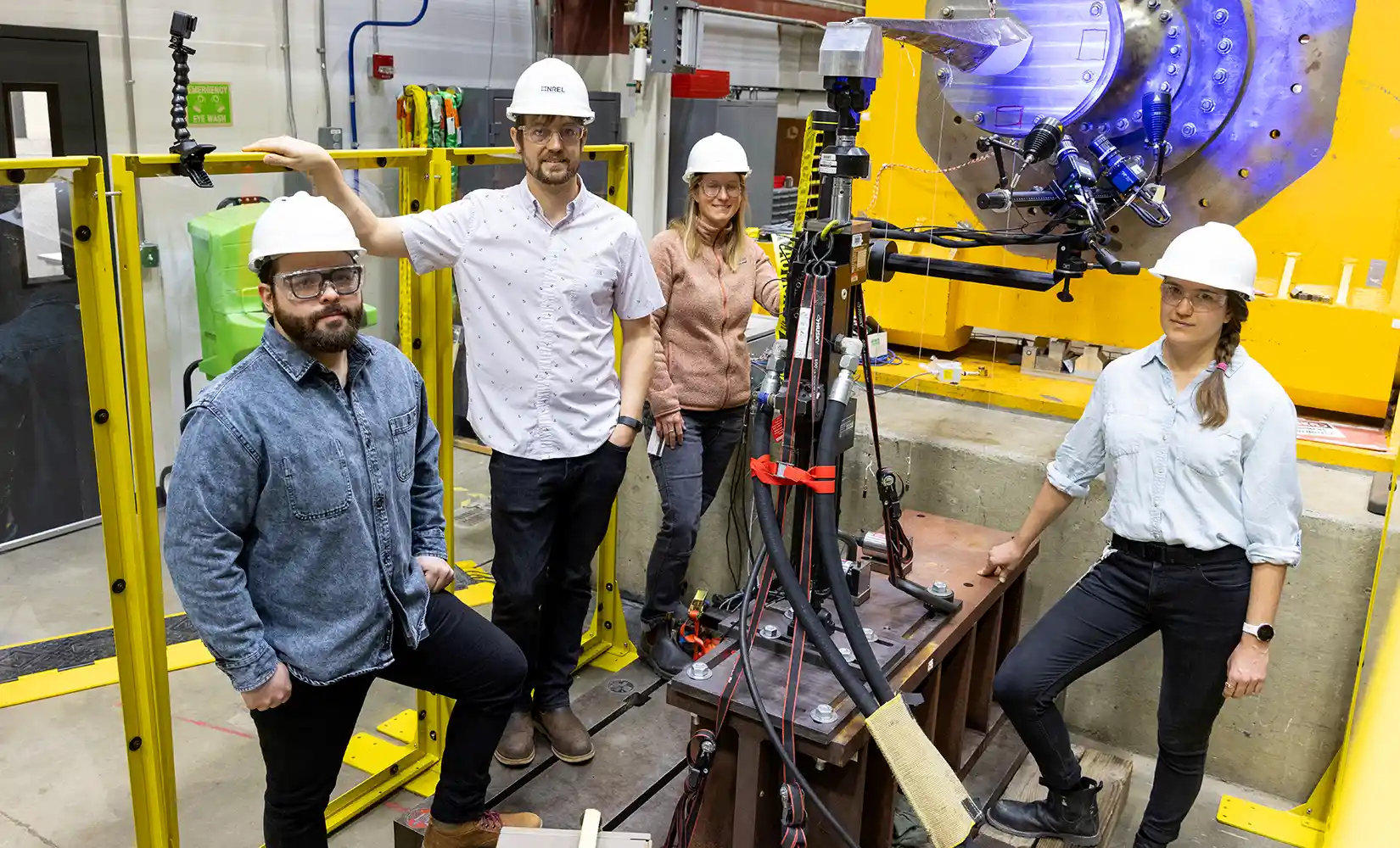
The ocean's power can make or break fledgling marine energy devices. Now, the lab's laser-powered metal additive manufacturing machine (3D printer) can offer marine energy developers greater flexibility to test, refine, and strengthen their device components, creating potential to accelerate the process from theoretical concept to open-water readiness. The new tool could help researchers and partners reduce prototyping costs, wait times, and design barriers.
Hydropower News
Now Available: Enhanced Web-Based Pumped Storage Hydropower Cost Model
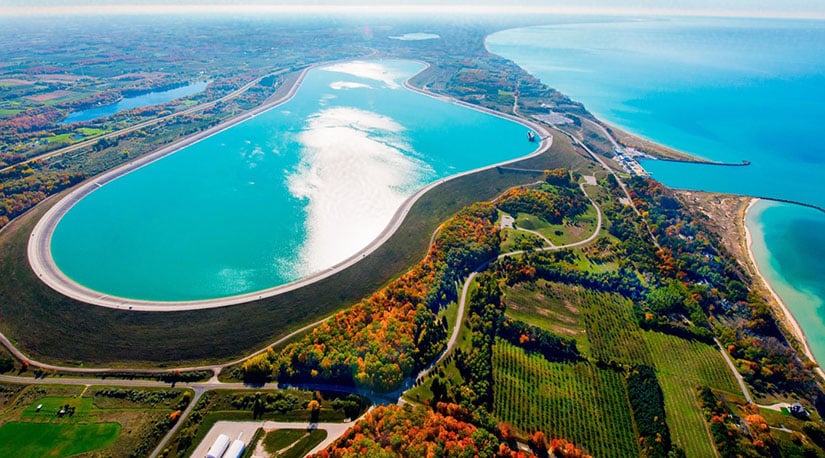
The latest release of our PSH Cost Model makes understanding hydropower costs easier than ever. Now available as an interactive web-based tool, it features new data; new design options for rockfill and roller-compacted concrete dams, liners, and variable-speed pumps; and updated market cost factors—all built for a more flexible and accessible user experience. The model also connects with our closed-loop pumped storage hydropower facilities. Watch this video on YouTube to learn more about the PSH cost model.
New Report Highlights How Hydropower Can Support Grid Reliability
In a newly published technical report Existing Methods for Grid Strength Assessment and the Role of Hydropower in Future Grids, researchers examined approaches for evaluating grid strength and identified gaps that limited their effectiveness for future power systems. The report highlights opportunities to better capture stability and reliability needs and explores how hydropower can support grid strength by providing essential services that ensure the grid can meet the needs of a dynamic power sector.
Hydropower in the News
NLR Launches Web-Based Pumped Storage Cost Model With Integrated Life-Cycle Analysis, International Water Power and Dam Construction (2026)
Argonne, NLR Launch Beta Version of Hydropower Market Game for Industry Feedback, International Water Power and Dam Construction (2025)
Marine Energy News
From Beta to Data: Marine Energy Analysis Tool Is Now Stable and Ready
Researchers from the National Laboratory of the Rockies, Pacific Northwest National Laboratory, and Sandia National Laboratories have recently released version 1.0 of the Marine Hydrokinetic Toolkit (MHKiT) on GitHub—a free, publicly available software tool used to process, analyze, visualize, and standardize marine energy data. Marine energy developers depend on data—an ocean's worth—to hone their early-stage technology designs and nudge them closer to commercial use. The latest version of MHKiT offers equivalent functionality in two platforms: MHKiT-Python and MHKiT-MATLAB.
Nora Reidinger's Path to Ocean Power
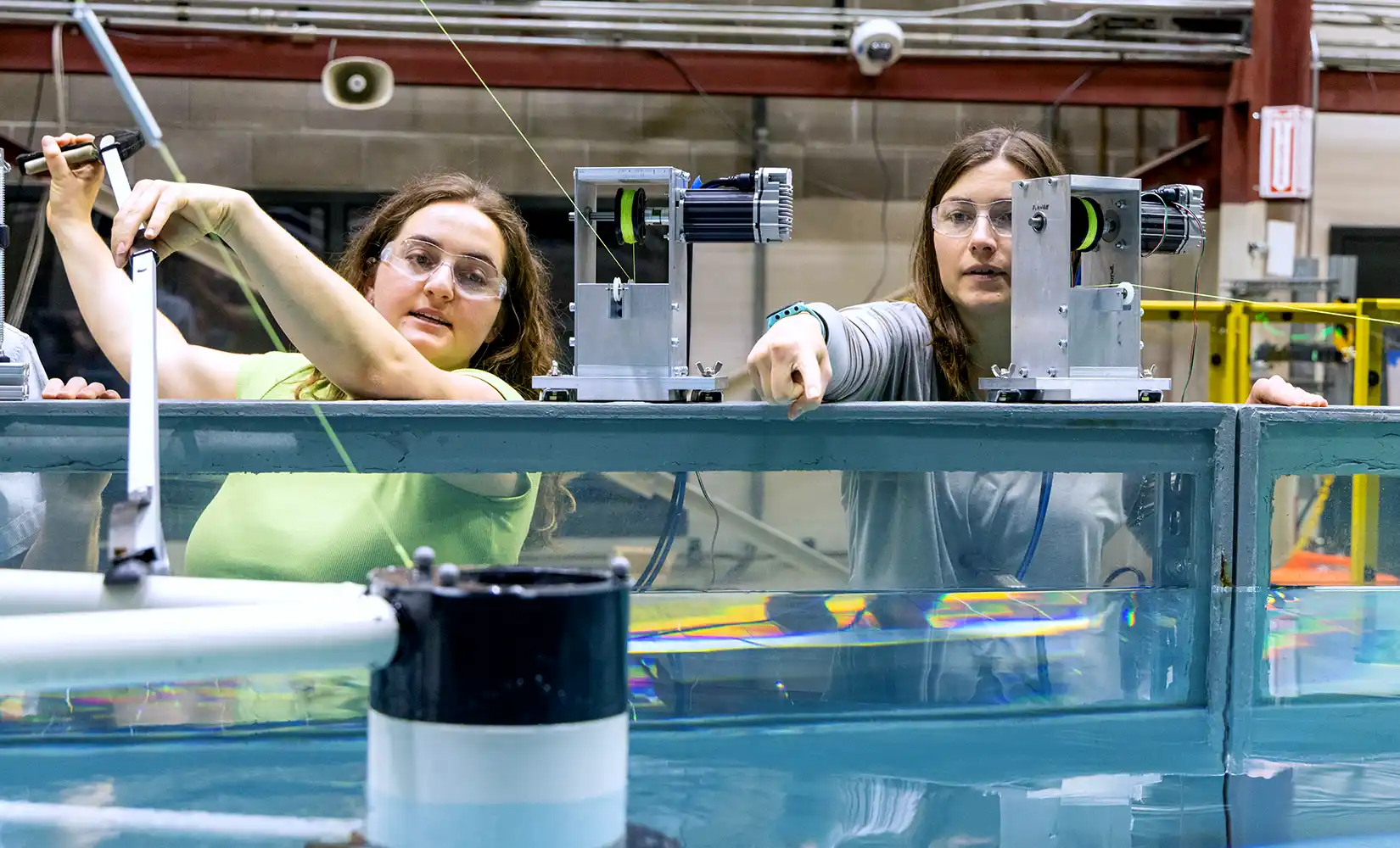
Nora Riedinger can't imagine life without the ocean. So, the young engineer opted for a career in the marine energy industry, which builds technologies to generate energy from powerful ocean and river motions. But even if Nora was keen on marine, she wasn't sure how to dip her toe in that career. Then, she joined the Marine Energy Collegiate Competition and got hands-on experience, connected with experts, and earned a national lab internship. Follow Nora's journey from undergrad to national lab.
HERO's Mission: An Elevator Part Could Bolster Marine Energy Technologies; Engineering "Video Games" Meet Wave Tank
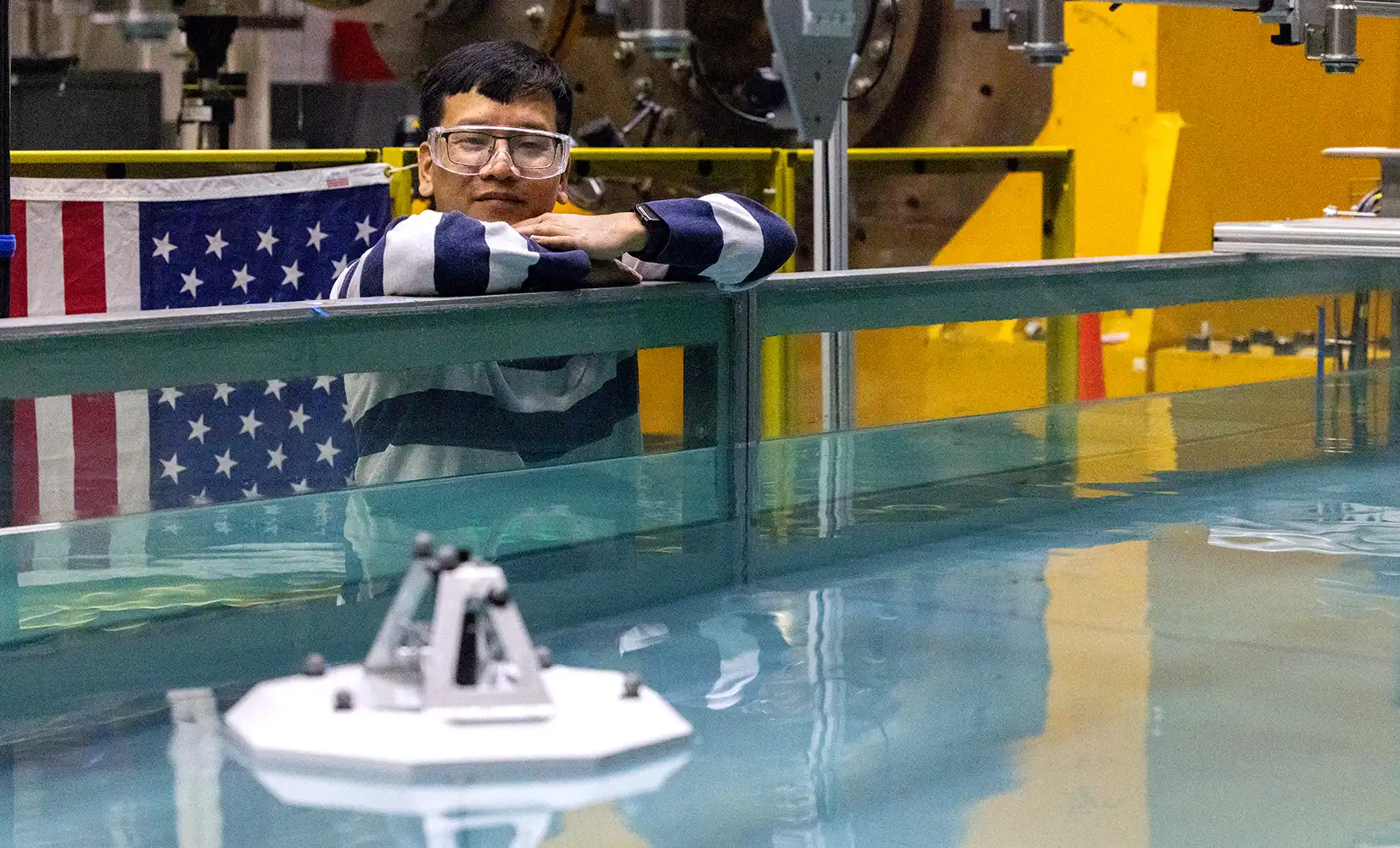
The National Laboratory of the Rockies' hydraulic and electric reverse osmosis wave energy converter (HERO WEC) surfed the laboratory's wave tank, facing a third round of trials and tribulations to advance wave energy research. Since 2024, the team has been improving the HERO WEC's robustness, reliability, and deployability by modifying different components on the device and testing the revised design. Researchers have already upgraded the winch line, which both anchors the WEC and allows it to move freely with the waves. In December 2024, they swapped the original wire rope with a polyurethane flat belt that overperformed in initial lab testing. Now, they are focusing on the WEC's outer body and structure. See how researchers are validating computer-generated scenarios for wave energy converters.
Can Your Wave Energy Technology Survive the Ocean? Ask SEA-Stack.
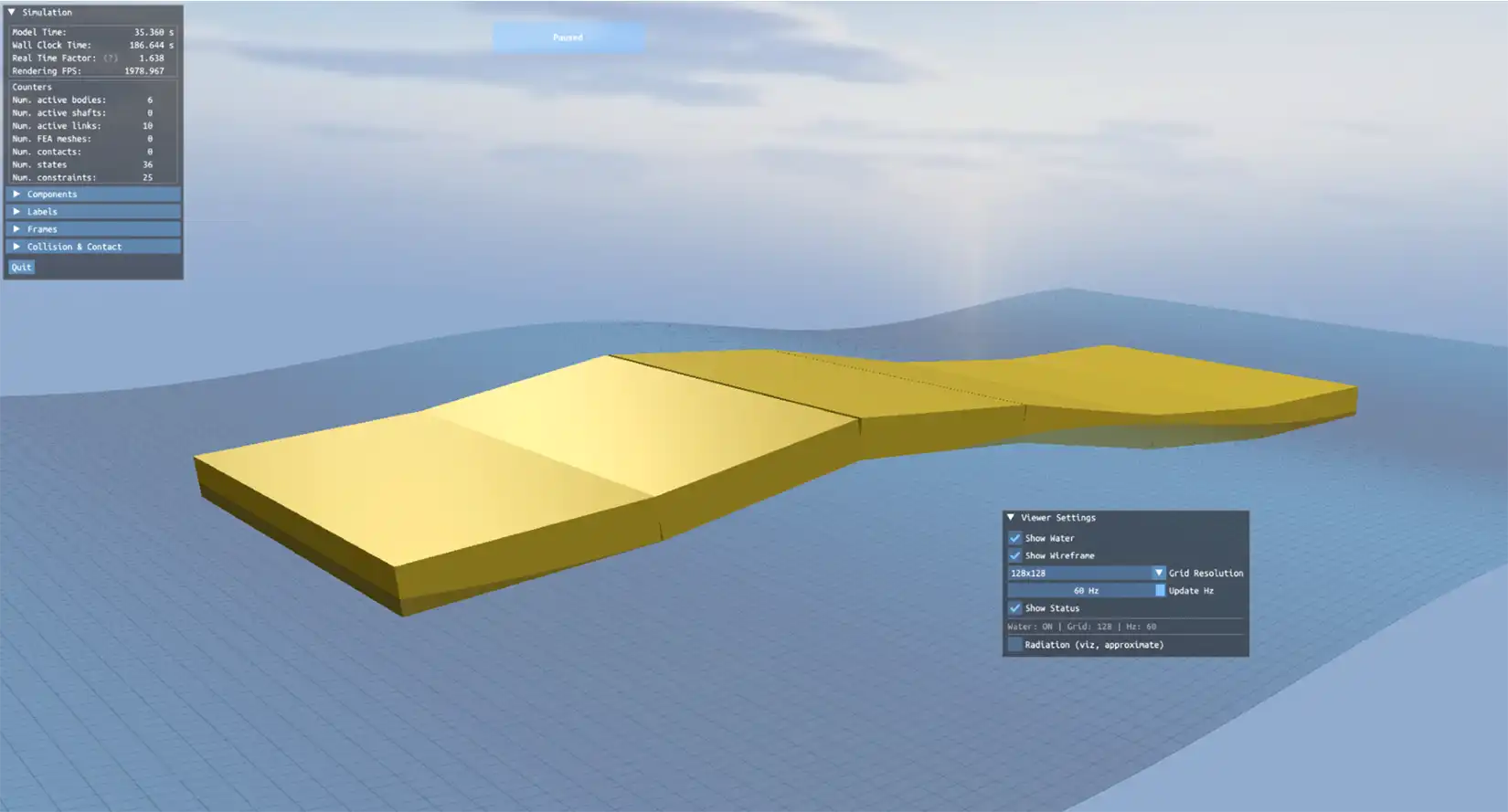
SEA-Stack—a free, open-source modeling tool on GitHub—brings together multiple wave energy simulation capabilities into one powerful, easy-to-use platform. The tool is designed to help developers quickly test, refine, and de-risk new designs before getting their devices in the water. Built to be 10 to 100 times faster and more flexible than existing tools, SEA-Stack supports everything from early-stage concepts to high-fidelity analysis for wave energy devices and other ocean-based technologies. By reducing time, cost, and uncertainty, SEA-Stack has the potential to accelerate technology development and enable wave energy devices to deliver reliable energy to populated coastal cities, rural and remote communities, and even data centers and military bases. Learn how SEA-Stack will be a Swiss Army knife for wave energy developers (and beyond).
Battery-Free Power for Ocean Sensors
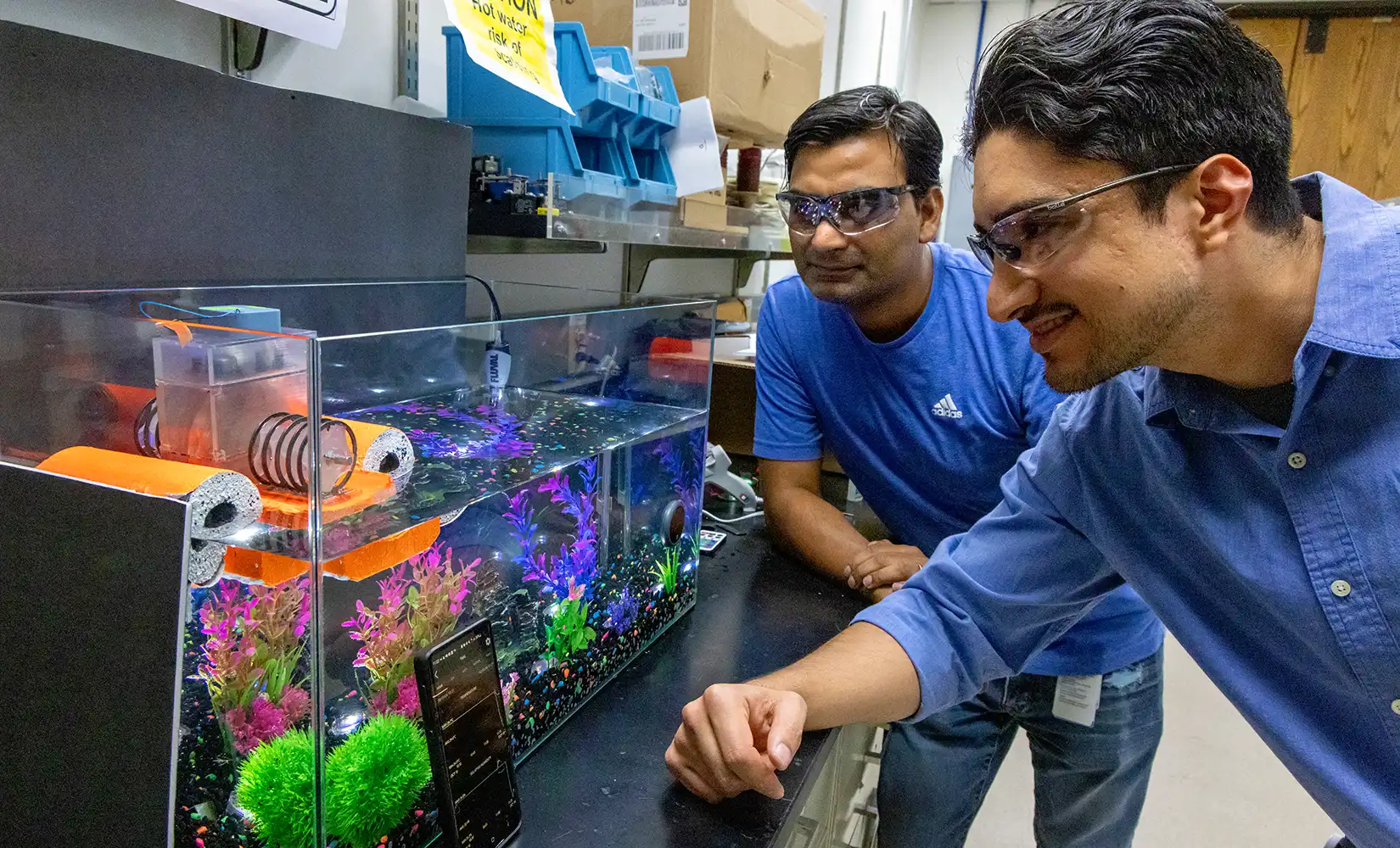
New publications in Communications Engineering and Device highlight the lab's work on thermomagnetic generators, which harvest energy from the tiny temperature differences common in marine environments. Lab prototypes produced up to 6.7 milliwatts—enough to run sensors and send Bluetooth data—and wave-tank tests confirmed stable, real-world performance. The technology offers a scalable, low-maintenance power source for long-term, autonomous ocean monitoring and opens new possibilities for harvesting low-grade heat in other settings as well.
Marine Energy in the News
U.S. Flexes Its Marine Energy Muscles For Reliable, 24/7 Baseload Power Generation, CleanTechnica (2025)
Testing Expertise and Access for Marine Energy Research Selects 18 New Marine Energy Projects for Technical Support, Offshore Energy (2025)
Underwater Turbine Achieves Powerful Milestone With Ocean-Harnessing Tech, The Cool Down (2025)
Underwater Turbine Spinning for 6 Years Off Scotland’s Coast Is a Breakthrough for Tidal Energy, AP News (2025)
Turbine in Scotland Hits 'Very Significant Milestone' In a Breakthrough for Tidal Energy, Euro News (2025)
NLR Brings Laser-Powered 3D Printing to Marine Energy Research, Voxel Matters (2025)
Scientists Unveil Massive 3D Printer for Crucial Underwater Project, The Cool Down (2025)
HERO's Mission: Engineering "Video Games" Meet Wave Tank, Clean Technica (2025)
Wave Energy Converter Project Moves Toward At-Sea Testing, Ocean Observatories Initiative (2025)
Eco Wave Power Launches Its First U.S. Wave Energy Project, Renewable Energy World (2025)
Research Brief: Evaluating Wave Energy Availability in the Great Lakes and Blue Economy Opportunities, Lake Scientist (2025)
Beneath the Surface

Engineer Bri Friedman is working with the laboratory's marine energy team to develop a device called the small underwater research flap wave energy converter—or SURF-WEC, for short. SURF-WEC takes the form of a submerged flap that swings back and forth to capture energy from ocean waves to power an electric generator.
As any marine energy researcher or technology developer knows, harnessing energy from ocean waves is a big challenge. For Friedman, tackling these challenges feels surmountable—thanks to her team's collaborative spirit.
Read more about Friedman and her path toward a career in marine energy.
Science, Technology, Engineering, and Math; Competitions; and Workforce News
REDi Island Brings Water Power to Life
The REDi Island app is now available on OpenEI, introducing new areas to explore like Main Grid Metropolis, a wave-powered seafood farm, and a remote research station, all incorporated into the dynamic web app. Go on an interactive scavenger hunt across the virtual island and explore hands-on activities, engaging lessons, 3D models, and more.
Explore New and Updated Water Power Science, Technology, Engineering, and Math, and Workforce Resources on OpenEI
Like a thriving coral reef, the Water Power STEM ecosystem continues to grow on OpenEI. Discover updated educational libraries, interactive learning tools, career maps, and workforce insights that support education, recruitment, and industry readiness across hydropower and marine energy.
Events and Opportunities
Introduction to Microgrid Research and Marine Energy Technology Integration
Virtual, Feb. 9, 2026, 12 p.m. MT
As tidal and wave energy technologies are deployed in remote communities, integrating them with existing microgrids can introduce significant design and installation risks. Join researchers on Feb. 9 at noon MT to learn how open-source microgrid models and hardware-in-the-loop testing can help de-risk marine energy systems before deployment— improving reliability and reducing costs. Register for this webinar and others in the series.
Application Open for Testing Expertise and Access for Marine Energy Research Request for Technical Support
Applications are now open for a Testing Expertise and Access for Marine Energy Research (TEAMER) request for technical support. TEAMER Requests for Technical Support are a collaboration between the technology developer or researcher and the facility chosen to help meet the recipient's technical objectives. Applications for TEAMER Requests for Technical Support 18 are due by June 5, 2026. Learn more and find out how to apply through TEAMER.
Webinar on Navigating Hydropower Environmental Licensing
A recent webinar explored how hydropower developers, regulators, and stakeholders can more effectively navigate environmental considerations in licensing and relicensing using the DOE-funded Environmental Decision Support (EDS) Toolkit. Participants learned how the toolkit brings together data, tools, and guidance to support more informed decision-making and streamlined project development. If you couldn't attend, stay tuned for the webinar recording on the EDS Toolkit webpage.
Recent Publications
Hydropower
Methods for Assessing Opportunities for Ring Dam Pumped Storage Hydropower, NLR Technical Report (2026)
An Integrated Hydroclimatic Assessment of Future Reservoir and Hydropower Operations in the U.S., Earth's Future (2025)
Existing Methods for Grid Strength Assessment and Role of Hydropower in Future Grids, NLR Technical Report (2025)
Marine Energy
Hybrid-Energy-Powered Electrochemical Ocean Alkalinity Enhancement Model: Plant Operation, Cost, and Profitability, Clean Technologies (2026)
Nature-Inspired Lotus-Shaped Fins Combined With Hybrid Nanoparticles and Metal Foam for High-Performance Latent Heat Thermal Energy Storage, International Journal of Heat and Mass Transfer (2026)
Laboratory Testing to Assess the Feasibility of Polyurethane Flat Belts for Marine Energy Applications, Journal of Marine Science and Engineering (2025)
Hygrothermal Aging and Thermomechanical Characterization of As-Manufactured Tidal Turbine Blade Composites, Journal of Marine Science and Engineering (2025)
Review of Recent WEC-Sim (v6.1) Advanced Features, International Marine Energy Journal (2025)
Review on Phase Change Materials and Thermoelectric Generators for Ocean Thermal Gradient Applications, Renewable and Sustainable Energy Reviews (2025)
Open Specy 1.0: Automated (Hyper)Spectroscopy for Microplastics, Analytical Chemistry (2025)
Comparing Constant and Transient Membrane Transport Parameters for Use in Wave Desalination Models, Membranes (2025)
Review on Phase Change Materials and Thermoelectric Generators for Ocean Thermal Gradient Applications, Renewable and Sustainable Energy Reviews (2025)
Hybrid Energy-Powered Electrochemical Direct Ocean Capture Model, Clean Technologies (2025)
Underwater Thermomagnetic Generator for Remote Marine Thermal Energy Harvesting and Sensing, Device (2025)
Thermomagnetic Generators for Ultra-Low-Grade Marine Thermal Energy Harvesting, Communications Engineering (2025)
Initial Characterization of the NLR Large Amplitude Motion Platform, NLR Technical Report (2025)
Lessons Learned: Summary of Insights From the HERO WEC and Waves to Water Deployments Between 2022 and 2024, NLR Technical Report (2025)
Innovating Distributed Embedded Energy Prize: A Lessons Learned Report, NLR Technical Report (2026)
Want More?
Subscribe to The Current to get the next water power newsletter in your inbox.
For the latest from the U.S. Department of Energy's Water Power Technologies Office, sign up for its water power newsletters. Have a more general question or can't find what you're looking for? Send us an email at water.power@nlr.gov.
Share

Last Updated Aug. 13, 2026