
Advanced Industries and Manufacturing Research
NLR's advanced industries and manufacturing research helps accelerate manufacturing innovations, processes, and tools across industrial sectors and technology areas.
Our workforce, technical resources, facilities, and capabilities support the cross-cutting nature of advanced manufacturing research and development. Explore NLR's advanced industries and manufacturing research, capabilities, impacts, partnerships, and more.
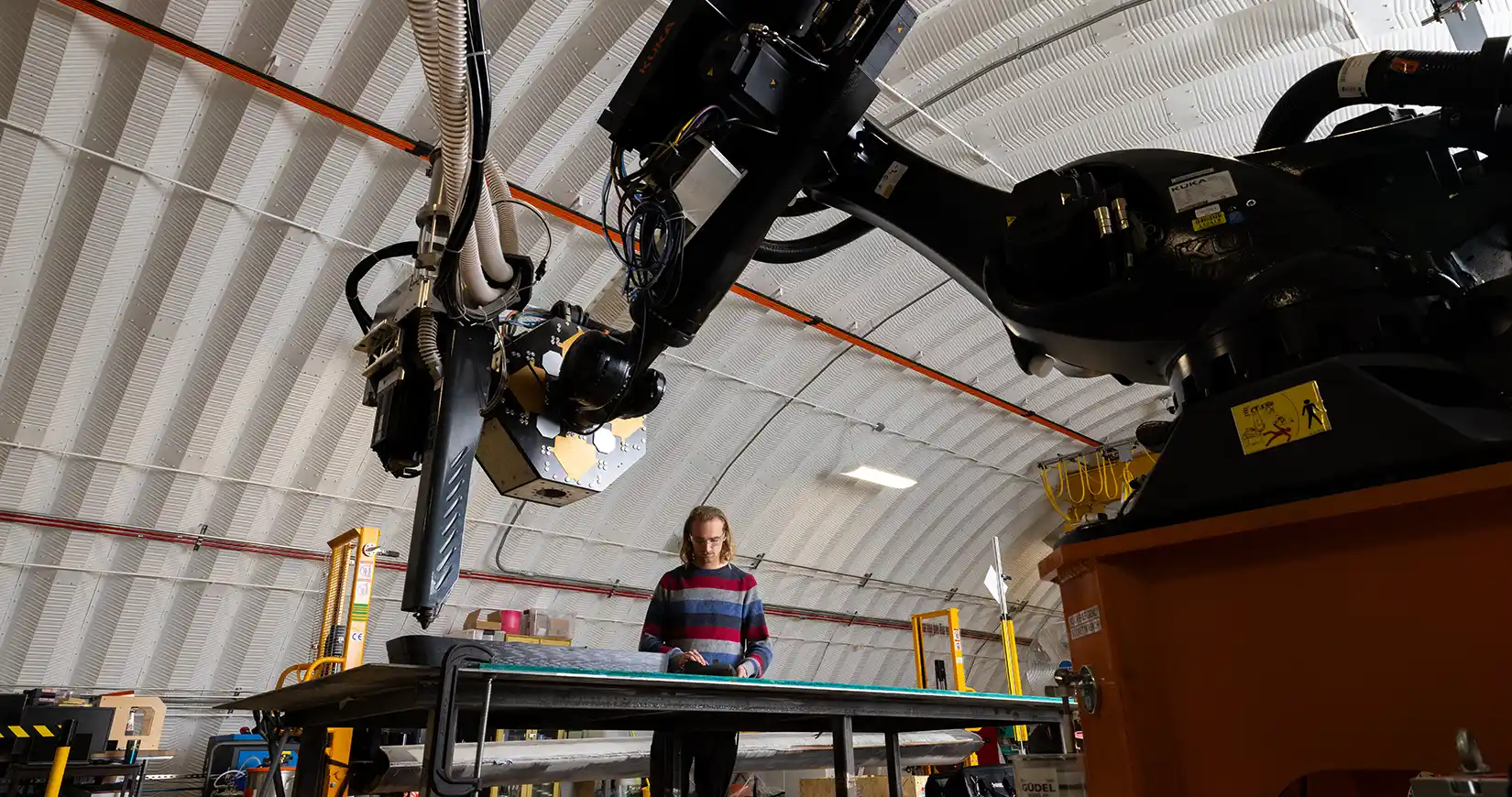
Featured Projects and Team Members
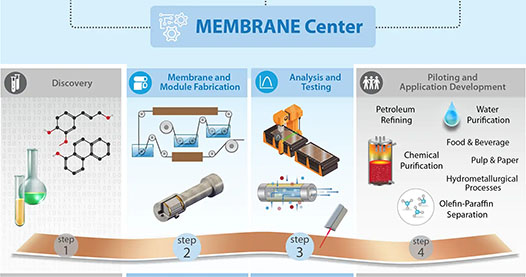
Discover one of NLR's collaborative user facilities, designed to help national laboratories, industry, and academia develop and pilot new membrane technologies into market-ready applications.
Learn more about the Membrane Engineering for Manufacturing, Benchmarking, Research, Analysis, and Next-Gen Evaluation center.

Find out about NLR researchers like Steve Hammond who explains some of the big artificial intelligence data center challenges, why NLR is the laboratory to solve them, and the qualities we need in our next generation of energy problem solvers.
Browse our latest Manufacturing Masterminds Q&A.
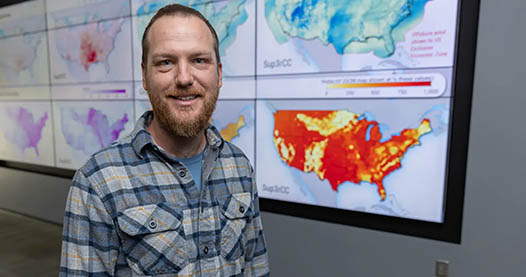
Learn how NLR researcher Ryan King is using artificial intelligence models to optimize and scale mining processes.
Read more about our work on accelerating critical minerals research.
Research Topic Areas
Cement and Concrete
NLR is working to optimize cement production, develop and evaluate new supplementary cement materials, and enhance concrete durability and performance. NLR has partnered with leading cement and concrete companies as well as end users—including contractors, designers, owners, and data center developers—to unleash an efficient and competitive domestic U.S. construction industry.
Chemicals and Fuels
NLR's biofuels and bio-based chemicals research supports the development of relevant, cost-competitive, and performance-advantaged fuels and chemicals from biomass and waste resources. NLR's fuel and chemical production technologies often rely on underutilized feedstocks, such as waste biomass or plastics, and convert them into conventional chemicals, such as high-purity acetic acid, adipic acid, and ethylene, or "performance advantaged" chemicals with unique functionality that can augment today's materials. Additionally, NLR has a large focus in fuels from waste feedstocks to expand the fuel supply chain while delivering better performance. Researchers use existing and emergent technologies to help U.S. industries remain globally competitive.
Composite Materials
NLR's test bed for composites can screen new formulations from the beaker scale up to a 50+ kg prototype scale. These new formulations include materials that have faster cycle times or are recyclable by design. To accomplish this, NLR partners with industry and leverages its Composites Manufacturing Education and Technology Facility to develop advanced composites and processes that are ready for industrial translation. This effort includes working to advance marine energy composite materials, leading to lightweight, high-quality materials and manufacturing methods that are also resilient to harsh ocean environments.
Critical Materials
NLR investigates limitations in critical materials supply chains and uses researchers' extensive understanding of integrated energy solutions to ensure manufacturers can achieve reliable operations using available domestic energy resources. Through collaborations with other national labs on projects such as METALLIC (on the National Energy Technology Laboratory website), NLR helps ensure U.S. supply chain security by developing new materials and technologies that use fewer critical materials (e.g., gallium, germanium, and rare earth elements).
Recycling and Alternative Feedstocks
NLR supports research and approaches to reduce demand for virgin feedstocks in U.S. manufacturing by extending the useful lifetimes of materials. NLR researches how to produce natural gas, biofuels, materials, and chemicals from these feedstocks.
Harsh-Environment Materials
NLR's advanced manufacturing research addresses technical challenges related to harsh-environment materials in the fields of nuclear, geothermal, hydropower, and energy storage. For example, NLR is developing materials that can withstand harsh environments to enable the expansion of geothermal energy.
Iron and Steel
NLR works closely with partners to strengthen the domestic steel industry. Focus areas include enhancing low-sulfur electric arc furnace operation, developing technologies to remove copper from scrap supply, and developing iron-reduction technologies that can address low-grade ore and alternative domestic feedstocks. NLR's work spans the technology readiness level scale—from early-stage innovation to applied, multiton-scale demonstrations of systems operations and supply chain impacts.
Plastics and Polymers
NLR conducts research and development to deliver scalable technologies that enable cost-effective recycling, along with increased energy efficiency for the manufacture of plastics, and water savings for paper manufacturers. NLR focuses on synthesizing polymers for transportation, water purification, and advanced membrane separations and infrastructure. NLR leads the multiorganization The Bio-Optimized Technologies to keep Thermoplastics out of Landfills and the Environment (BOTTLE™) research consortium, which develops chemical upcycling strategies for today's plastics and redesigns tomorrow's plastics to be recyclable by design.
Power Electronics
NLR develops materials, device architectures, and systems for power electronics (that you can explore on YouTube), that support a range of distributed energy sources on the grid. This research is conducted across various facilities (you can virtually visit in a 360-degree tour) on NLR's campuses. This enables us to design, prototype, and characterize components that allow seamless integration among alternative energy sources, energy systems, and the grid, as a part of the power electronics and electric machines team. NLR develops novel ultrawide-band-gap semiconductor material and device prototypes that underpin next-generation power electronic technologies, as a part of the materials discovery and design team. In addition, NLR's research across transportation and materials science addresses technology gaps to make reliable and inexpensive high-temperature and corrosion-resistant electronic devices for energy and electronic applications in extreme operating environments.
Supply Chain Manufacturing
NLR optimizes manufacturing supply/value chains by providing assessments, benchmarking, and comparative cost and sensitivity analyses around all phases of a product's life cycle, as well as data on material substitutions and distributed production. NLR developed the Materials Flows through Industry tool to track the material and energy demands from manufacturing supply chains.
Technical Assistance
NLR offers tailored technical support and technical assistance programs to American communities and industries. NLR is one of three U.S. Department of Energy laboratories supporting the Industrial Systems Energy Efficiency Development Collaborative (Oak Ridge National Laboratory), which helps organizations across the nation grow their workforce readiness in the U.S. industrial sector.
Thermal Processes
NLR develops open-source models that couple thermal-electrical-control networks into the URBANopt framework, facilitating improvement in total system energy efficiency by 25%. NLR helps industry identify on-site energy resources, (shown on the Better Buildings Solution Center site), for electrical and thermal energy that can protect them from disruptions while supporting the broader electrical grid.
Water and Wastewater
NLR conducts complex systems analyses that explore the flows of important resources in manufacturing, including the water-energy-materials nexus. NLR is one of four national laboratories leading the National Alliance for Water Innovation, which is an energy-water research hub designed to address water security issues in the United States. The National Alliance for Water Innovation focuses on early-stage research and development for energy-efficient and cost-competitive desalination and water reuse technologies.
Contact
Share

Last Updated Oct. 9, 2026