
Mobility Matters—April 2026
This quarterly newsletter highlights recent projects, partnerships, and publications related to NLR's transportation and mobility research.
Subscribe to receive this newsletter via email.
In This Edition
Our Evolution Is in Motion
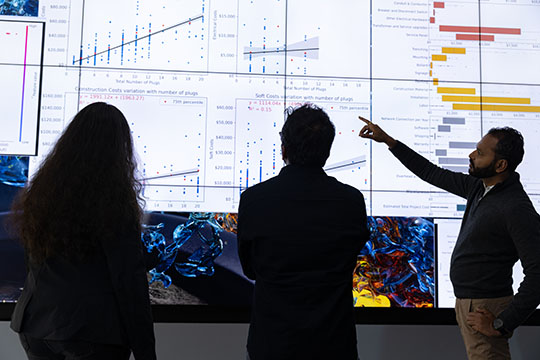
Science evolves as we learn more, do more, and expand the frontiers of research. In the same way, our lab is evolving—growing into a new name and expanding our historic focus on energy innovation and systems integration. At the same time, we're tackling new challenges: supply chains, critical minerals, and next-generation energy technologies.
While we might have a new name, our transportation and mobility research keeps driving forward. We're creating the nation's first model of the intermodal freight system, a tool we expect to help lower shipping costs and improve the reliability of our supply chains and freight network. In pursuit of next-generation technology development, we're speeding up the production of new synthetic aviation fuels and bringing high-fidelity realism to our transportation systems modeling.
Science is iterative, and so are we. But our commitment to creating affordable, reliable, and advanced transportation solutions remains.
Drive on,

Chris Gearhart
Director, NLR's Center for Integrated Mobility Sciences
Research News Highlights
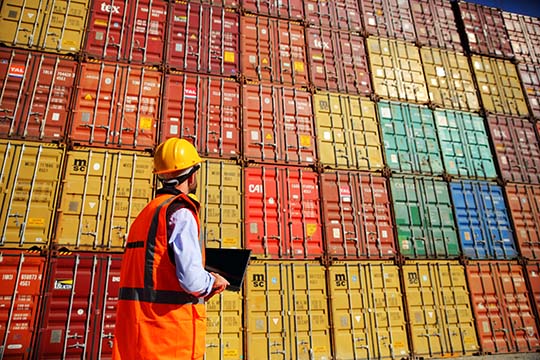
Lab Prepares Nation's First Model of the Intermodal Freight System
Tomorrow's freight systems will need to be faster, more reliable, and more cost-effective than today's. NLR researchers are building the nation's first modeling tool that can bridge the gap: INtermodal Freight Optimization for a Resilient Mobility Energy System (INFORMES). INFORMES will be the first and only public tool for modeling national intermodal freight movement, infrastructure planning, and logistics planning, with a goal of enabling streamlined, cost-effective freight and resilient freight systems. The public tool is expected to launch this year.
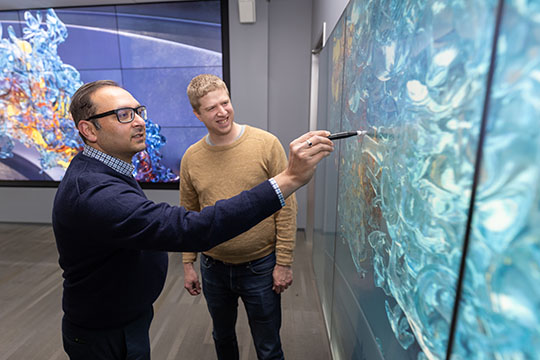
Computing Advancements Speed New Synthetic Fuels Process To Propel Commercial Aircraft
FuelLib is an open-source computational tool for predicting jet fuel properties designed to help researchers and producers estimate the properties that lead to safe and reliable synthetic fuel compounds. Advancements like this tool help speed up the qualification and production process for new domestic synthetic fuels in the United States to enable a more ready supply. Computational modeling can help de-risk investments, saving years of time and millions of dollars.
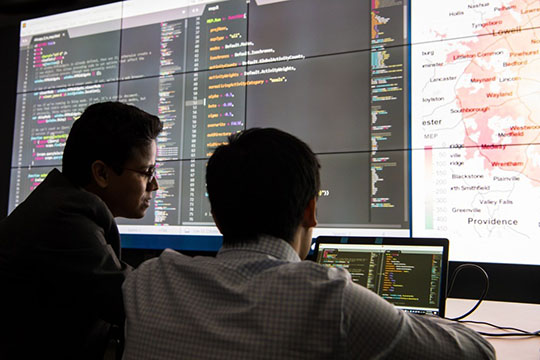
Tool Adds Demographic Realism to Transportation Modeling
Life changes how we move. NLR's new demographic microsimulator (DEMOS) tool accounts for real-life events—such as marriage, childbirth, education, employment, and migration—to enable more accurate modeling of travel demand, vehicle ownership, infrastructure planning, and beyond. DEMOS (GitHub) gives planners and analysts a deeper understanding of how travel behavior evolves with life cycle events, helping them anticipate future mobility needs and simulate transportation planning scenarios with greater precision.
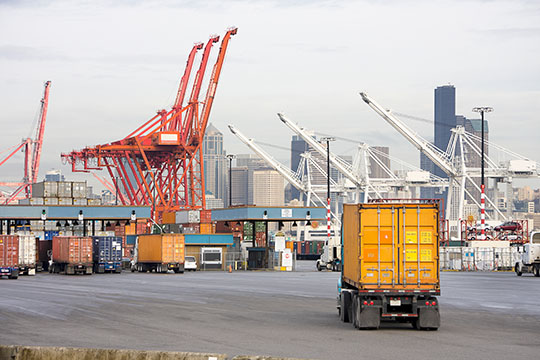
Fueling the Future: Annual Report Highlights Lab's Transportation Impacts
America's transportation and energy systems are at a crossroads—evolving faster than ever and becoming inseparable in their impact. With demand for energy surging and innovation accelerating, the opportunity before us is not simply to adapt, but to lead. At NLR, our transportation research is driven by a simple conviction: that the hardest problems are worth solving. With a clear focus on innovation and impact, we are just getting started.
Get To Know Our Team: Sarah Hipel
A conversation with Sarah Hipel, who leads NLR's mobility cybersecurity strategy.

What does your work focus on?
My work focuses on the intersection of mobility, energy systems, and cybersecurity. As transportation and energy infrastructure become increasingly connected, software-defined, and digitally orchestrated, the reliability of these systems depends not just on physical engineering but on the integrity of the digital infrastructure that supports them.
At NLR, I focus on developing the technical and institutional frameworks needed to make this transition secure and interoperable. This includes advancing cybersecurity approaches for grid-connected infrastructure, supporting open standards that allow devices and systems to communicate reliably, and creating environments where industry and researchers can test and validate these technologies together. Much of my work sits at the boundary between research, standards development, and industry collaboration, with the goal of ensuring that emerging mobility systems are secure, resilient, and capable of scaling globally.
What single mobility challenge would you say will come to the forefront in the next 5 years?
The biggest challenge will be securing the rapidly expanding digital layer of mobility infrastructure. Vehicles, infrastructure, grid services, and connected transportation networks are becoming deeply integrated with software, cloud services, and real-time communications.
Over the next 5 years, the scale of these systems will increase dramatically, and with that scale comes new risks. Devices that were once isolated are now part of complex cyber-physical ecosystems. Ensuring that these systems can communicate securely, authenticate each other, and operate reliably across many different vendors and networks will be critical. Addressing this challenge requires coordinated standards, trusted digital infrastructure, and large-scale testing environments that allow us to validate how these systems behave in the real world.
Can you share a defining moment in your research career?
A defining moment in my career came when I began working directly at the intersection of industry, standards bodies, and public research institutions. I realized that many of the challenges slowing the deployment of advanced mobility systems were not purely technical, but were coordination problems between organizations, standards, and implementation environments.
Seeing how small technical decisions in standards or architecture could influence entire industries fundamentally changed how I approached research. Instead of focusing only on individual technologies, I began thinking about the broader systems that enable innovation to scale, such as sharing testing environments requiring pre-competitive collaboration and open standards ecosystems. That shift has shaped much of the work I do today.
What piece of research are you most proud of conducting?
The work I'm most proud of is helping shape approaches that connect security with the physical operation of energy and mobility infrastructure. Traditionally, these domains have been addressed separately: Cybersecurity teams focus on networks and software, while engineers focus on the physics of power systems and devices.
Bringing those perspectives together so that digital security controls can be validated against physical system behavior has been an exciting area of work. It opens the door to new ways of detecting and preventing threats in complex cyber-physical systems like charging networks and grid-connected infrastructure. Contributing to this emerging field and helping create environments where researchers and industry can validate these ideas at scale has been particularly meaningful.
Must Reads
Understanding Soot Formation in Next-Generation Jet Fuels
An NLR-led study published in Energy & Fuels examines how the chemical structures of several cycloalkane compounds—promising components of synthetic aviation fuel—affect soot formation during combustion. Using high-pressure reactor experiments, researchers analyzed soot precursors produced by fuels derived from isoprene and woody biomass, providing new insight into fuel design impact on aircraft performance.
NLR Research Improves 3D Materials Imaging With Deep Learning
A new deep-learning approach called P3T-Net—developed, in part, by NLR—helps overcome inconsistencies in 3D X-ray imaging caused by variations in scanning conditions. By transferring images into a consistent domain before analysis, the method allows previously trained artificial intelligence models to be reused across new datasets, reducing retraining and computational cost. Read the Nature Communications article to learn how the approach can aid research from geological rocks to batteries and fuel cells.
Project Closeout Report Models the Future of Freight Rail With ALTRIOS
The open-source Advanced Locomotive Technology and Rail Infrastructure Optimization System (ALTRIOS) modeling platform helps researchers and industry evaluate strategies for deploying advanced locomotive technologies and supporting infrastructure. The tool simulates train operations, energy use, and infrastructure interactions to assess long-term cost and performance trade-offs. The ALTRIOS project's final report details the software architecture and demonstrates its capabilities through a 30-year case study of freight rail routes in the Midwest.
Livewire Quarterly Newsletter Highlights New User Guide and Datasets
The latest edition of Livewire News celebrates the launch of the first-ever Livewire User Guide, which includes step-by-step instructions for both data stewards uploading data and consumers accessing datasets. It also highlights four new transportation datasets covering electric refuse trucks, propane mail delivery vehicles, airport ground support equipment, and curb management strategies to support research on fleet electrification and transportation planning.
FAQs on the Transportation Secure Data Center
The Transportation Secure Data Center (TSDC) is a centralized repository and archive for detailed transportation data from travel and transit surveys and studies conducted across the nation. A new fact sheet provides answers to some of the most frequently asked questions about the TSDC, including its uses, benefits, and privacy standards.
Brochure Showcases Lab Research Capabilities Across Power Electronics, Electric Machines, and Advanced Thermal Management Systems
A new brochure showcases the lab's efforts to develop cutting-edge experimental and modeling tools to design and evaluate high-efficiency power electronics, electric machines, and advanced thermal management systems. Their work also includes advanced power electronics packaging and emerging state-of-health monitoring techniques. Together, these capabilities enable safer, more reliable, and power-dense components that improve the efficiency and integration of transportation and energy systems.
Did You Know?
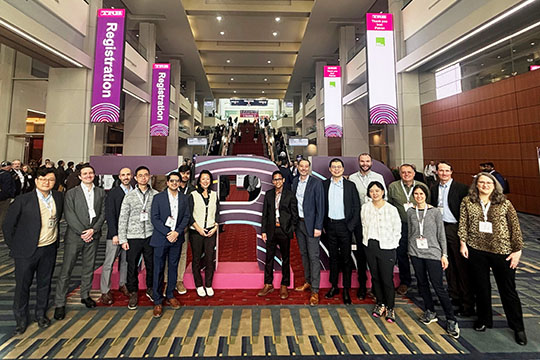
NLR transportation and mobility researchers showcased integrated transportation research at the 105th Annual Meeting of the Transportation Research Board Jan. 11–15, 2026. The meeting brought together thousands of transportation professionals from government, industry, and academia and featured sessions and workshops across all transportation modes. NLR presentations covered research topics including intelligent transportation systems, freight movement, and emerging vehicle technologies.
In Case You Missed It
Our latest FleetREDI Insights share quick highlights of how NLR's Fleet Research, Energy Data, and Insights (FleetREDI) platform can help inform the development of medium- and heavy-duty vehicle technologies through robust data offerings and analytical results.
Scalable GPS Data Logging To Support Advanced Fleet Analysis
Cold Weather Impacts on Electric School Bus Performance in Aurora, Colorado
Share

Last Updated Aug. 6, 2026