
Aim 1—Power Electronics Interface Co-Design
APEX is developing design rules for heterointegration through a co-design approach that includes first-principles theory and experimental studies of the formation of highly dissimilar interfaces.
Goals and Potential Impact
Accessing a broader range of materials combinations requires new strategies for integration beyond epitaxial growth of semiconductor layer on lattice-matched substrate. Interfaces are often integration-limited, where a mismatch between lattice constants and chemistries can produce undesired defects and accelerate performance degradation. At the same time, R&D is often limited to established combinations of materials under laboratory conditions, without considering long-term operation under harsh conditions in power electronic applications. Thus, the ability to tailor interface structure, chemistry, and properties is ever more important for realizing desired functionalities and performance under real-world operation conditions.
Aim 1 builds out the conceptual co-design groundwork needed to overcome limitations in the choice of the best materials combinations for aluminum gallium nitride (AlGaN), silicon carbide (SiC), and gallium oxide (Ga2O3) power electronics technologies, while taking into account nonidealities and real-world operation conditions. Knowledge of the interface structure on an atomistic level, as well as the interdiffusion or reaction products that may occur there, is critical for a mechanistic understanding of interface behavior. Developing new interface design strategies for combining dissimilar materials could expand material options for next-generation power electronics.
Science Questions
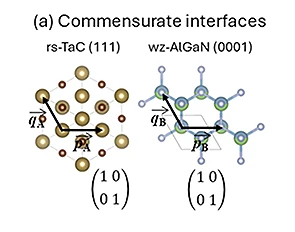
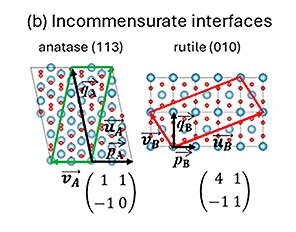
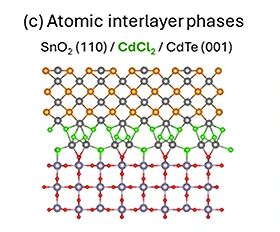
Interfaces can be designed via several approaches, based on the details of the structure and chemistry of the two initial layers being combined. Aim 1 conceptualizes heterogeneous interfaces in three categories with a hierarchy of increasing complexity (depicted below). These categories structure the formulation of science questions and associated hypotheses.
Contact
For more information about the research in Aim 1 or to discuss potential collaboration, please contact Stephan Lany at NLR.
Share

Last Updated Oct. 13, 2026