
Research
APEX hypothesizes that breakthroughs in power electronics functionality and reliability can be realized by understanding interface design principles and developing transformative manufacturing pathways that unlock broader materials choices for heterogenous integration.
We seek to enable these breakthroughs through foundational research to advance new materials and interfaces and understand and elucidate the chemical, physical, thermal, and electrical requirements at dissimilar interfaces.

Aim 1—Power Electronics Interface Co-Design
Developing design rules for broader heterointegration through a co-design approach that includes first-principles theory and experimental studies of the formation and design of highly dissimilar interfaces

Aim 2—Material Synthesis
Demonstrating novel material synthesis, including growth of novel conductive bulk single crystal carbide and boride substrates and related innovation in active layer heterogeneous integration
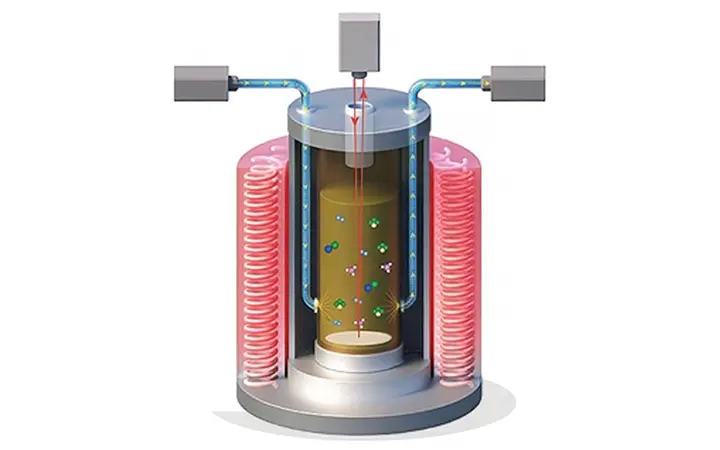
Aim 3—Transformative Manufacturing
Revolutionizing manufacturing via hydride vapor phase epitaxy to achieve both scale and speed, including studying AlGaN growth kinetics on novel substrates, incorporating in situ diagnostics, and hydride vapor phase epitaxy as a transformative manufacturing pathway
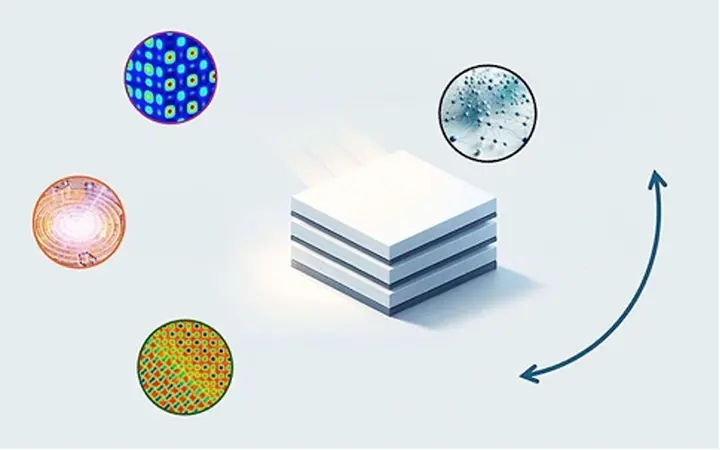
Aim 4—Interface Characterization
Understanding and controlling interfacial phases, reactions, and evolution to further the science for real-world performance, stability, and resilience applying multimodal, multiscale structural, thermal, and electronic characterization
Share

Last Updated Oct. 13, 2026